BLOOM.
Art Therapy Research in an Artistic Approach to the Creativity of Art Through Sensory Touch
2022-2025
The project BLOOM became a way to share this personal journey with others. I see art therapy as a discipline. Art therapy: there’s art, then there’s art that feels good, and then there’s art therapy. Art therapy uses the act and the techniques of art to treat psychological disorders and foster mental well-being. It encompasses a wide range of creative outlets to help people express their emotions and inner worlds, communicate, confront their trauma, and find a path to healing. I have been paying attention to, and also as an artistic lens—a tool—through which to explore the therapeutic power of touch in creative practice, to expand methods, and to open up new possibilities for support within my artistic practice. The project focuses not only on healing but also on creating meaningful experiences through shared exploration. Art as therapy is art-making that has well-being benefits. You may do it to relax, to express yourself, or to connect with others.
My goal was to create a space where emotional development could occur naturally through the creative process, leading to the provision of the positive side effects of art therapy. It is the combination of working with the participants and my own observations of their responses during the process that influenced my exploration at the beginning of the research. For example, the incorporation of various object surfaces, haptic signals, and EEG headset technological devices enhance the sensory experience. The artistic practice of the workshop not only provided a space for exploration for the participants, it became a co-creative process that blurred the line between art making and emotional development to engage in experiential learning and create artistic works that merged my personal creativity with interactive workshop activities for the participants.
As the artist, I designed the space and process of workshops in a way that invited gentle discovery and reflection. Participants engaged by working with materials through touch, they accessed forms of expression that bypassed language and drew on embodied memory and sensory intuition. This tactile engagement fostered self-awareness and emotional presence, making the creative process itself a tool for subtle healing and discovery in a moment of time and presence that I could arrange for the participants.
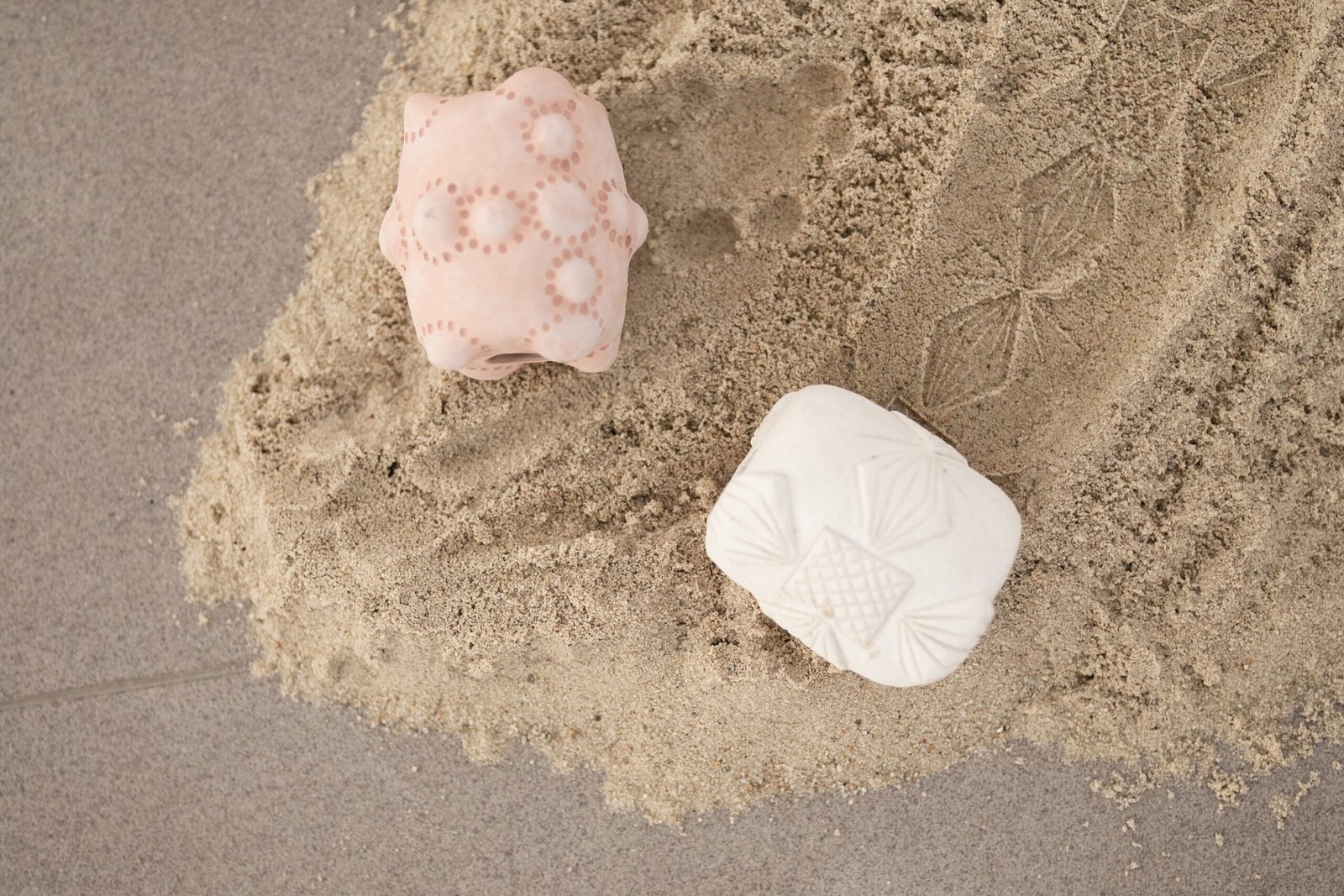
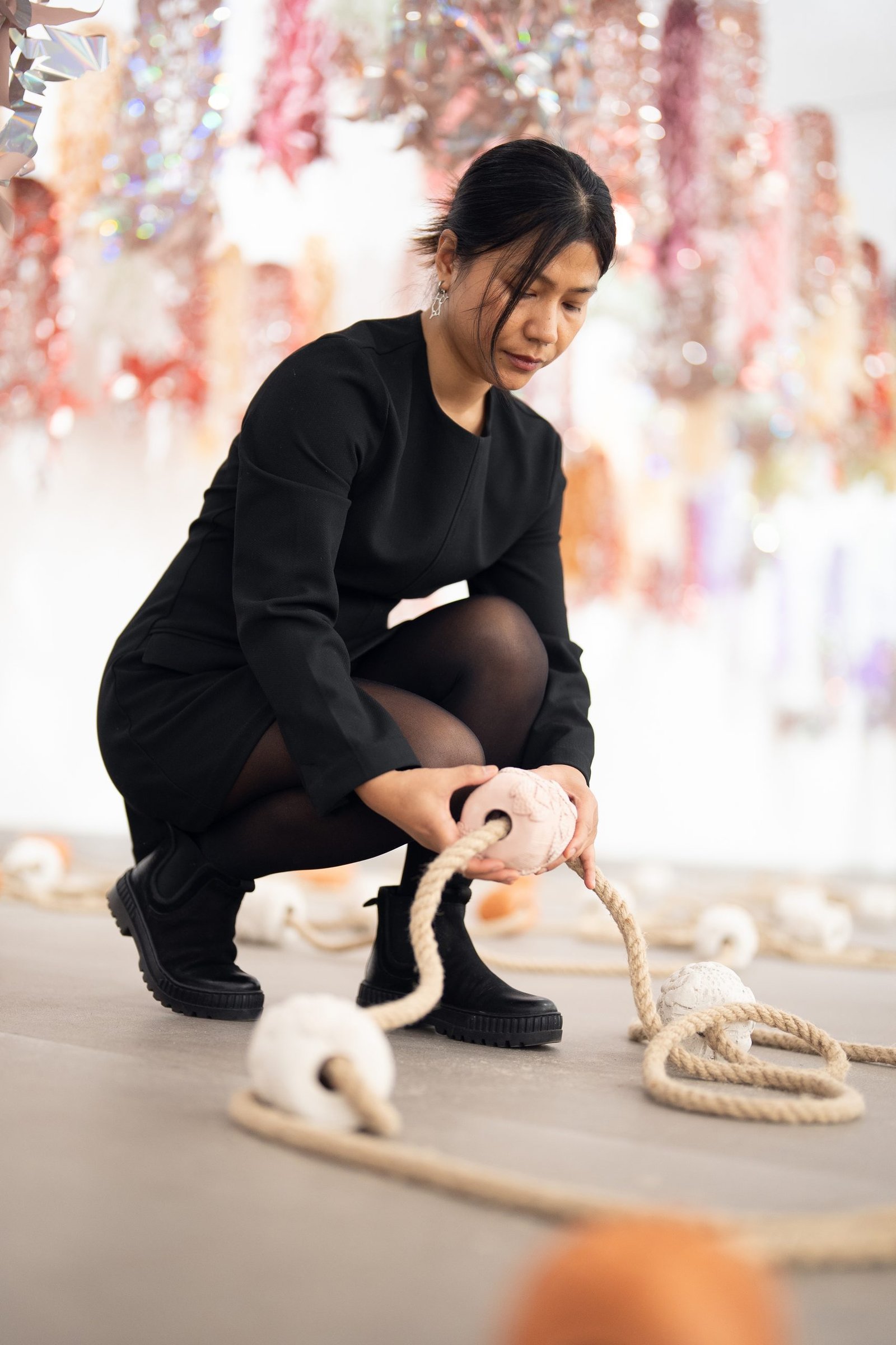
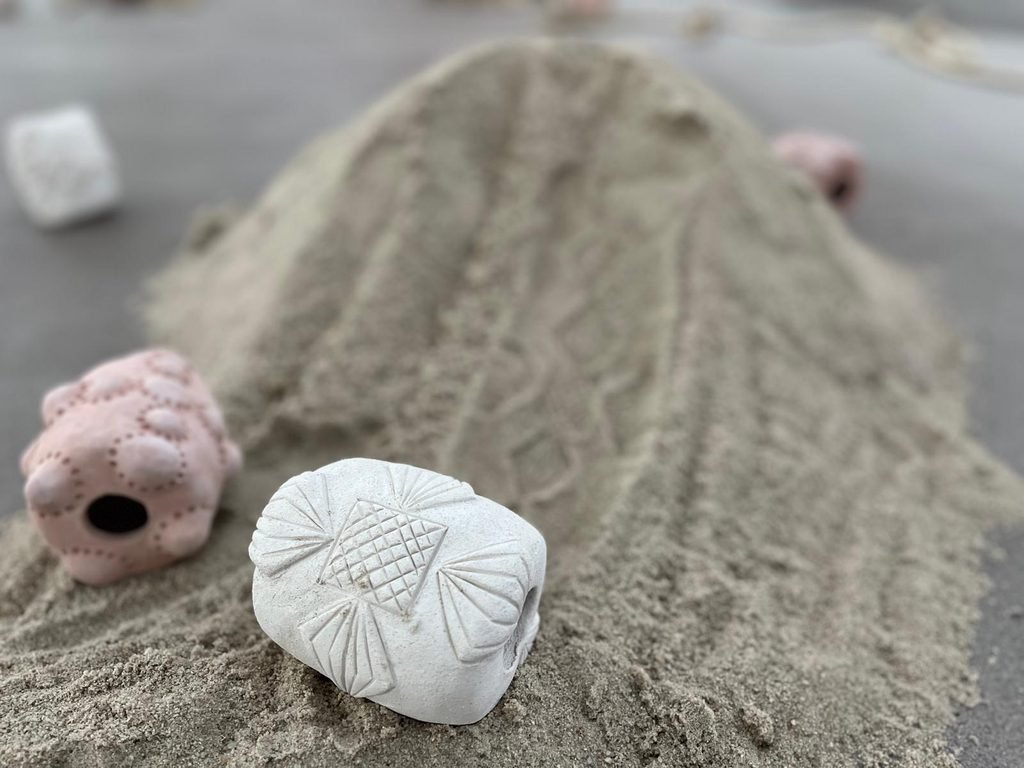
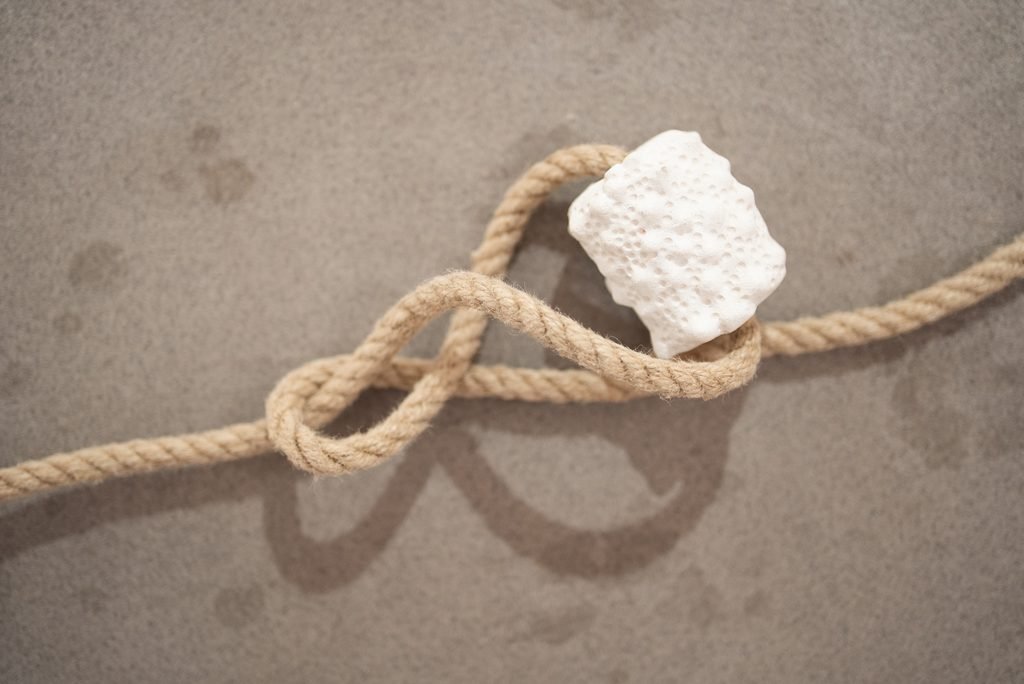
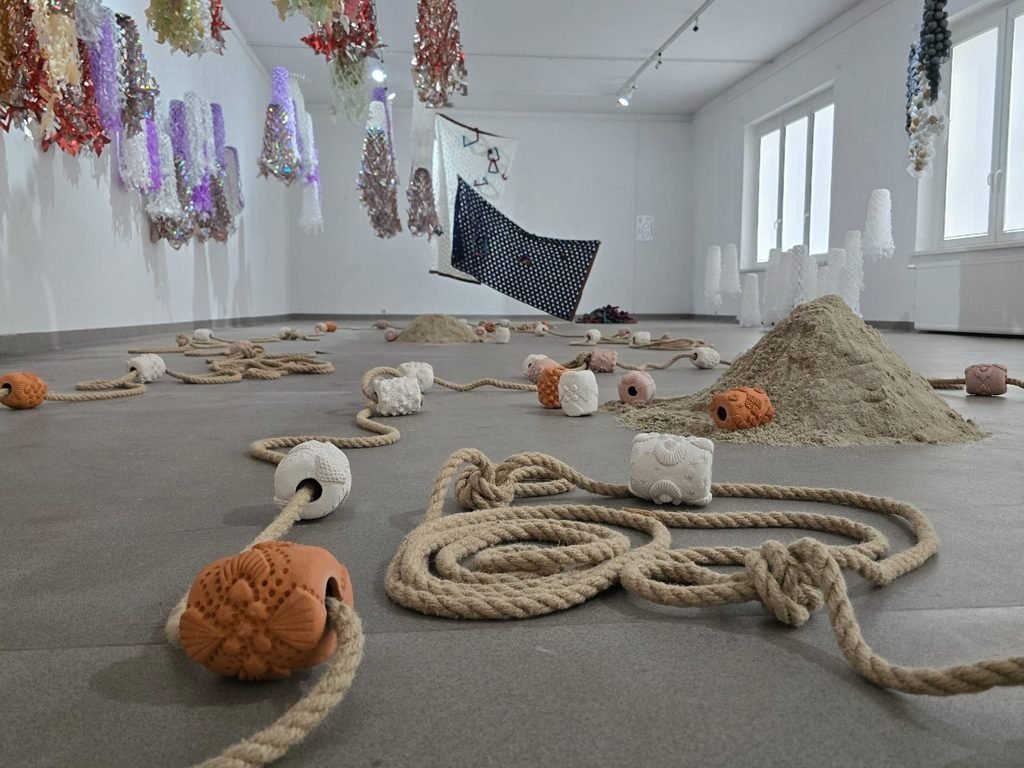
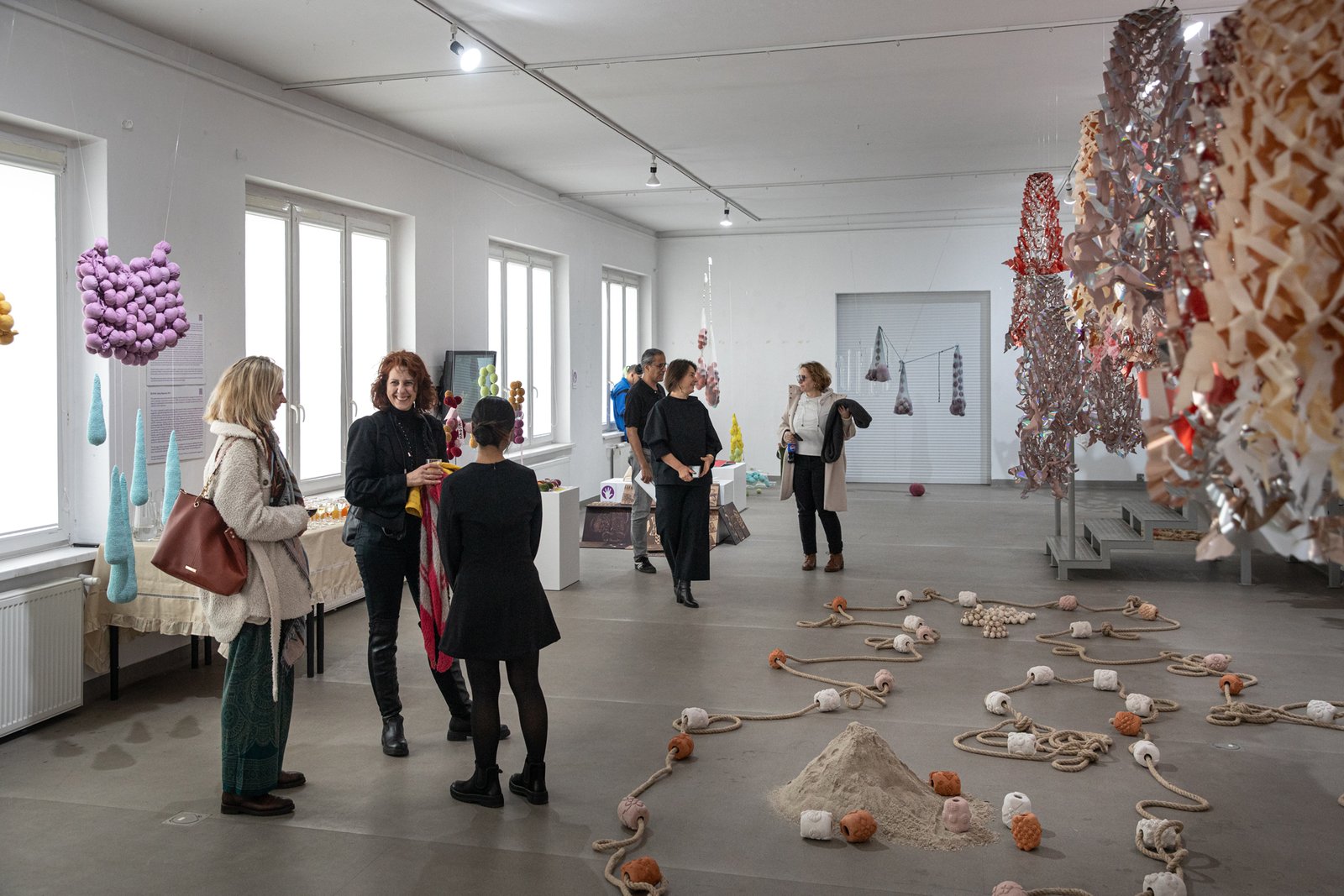
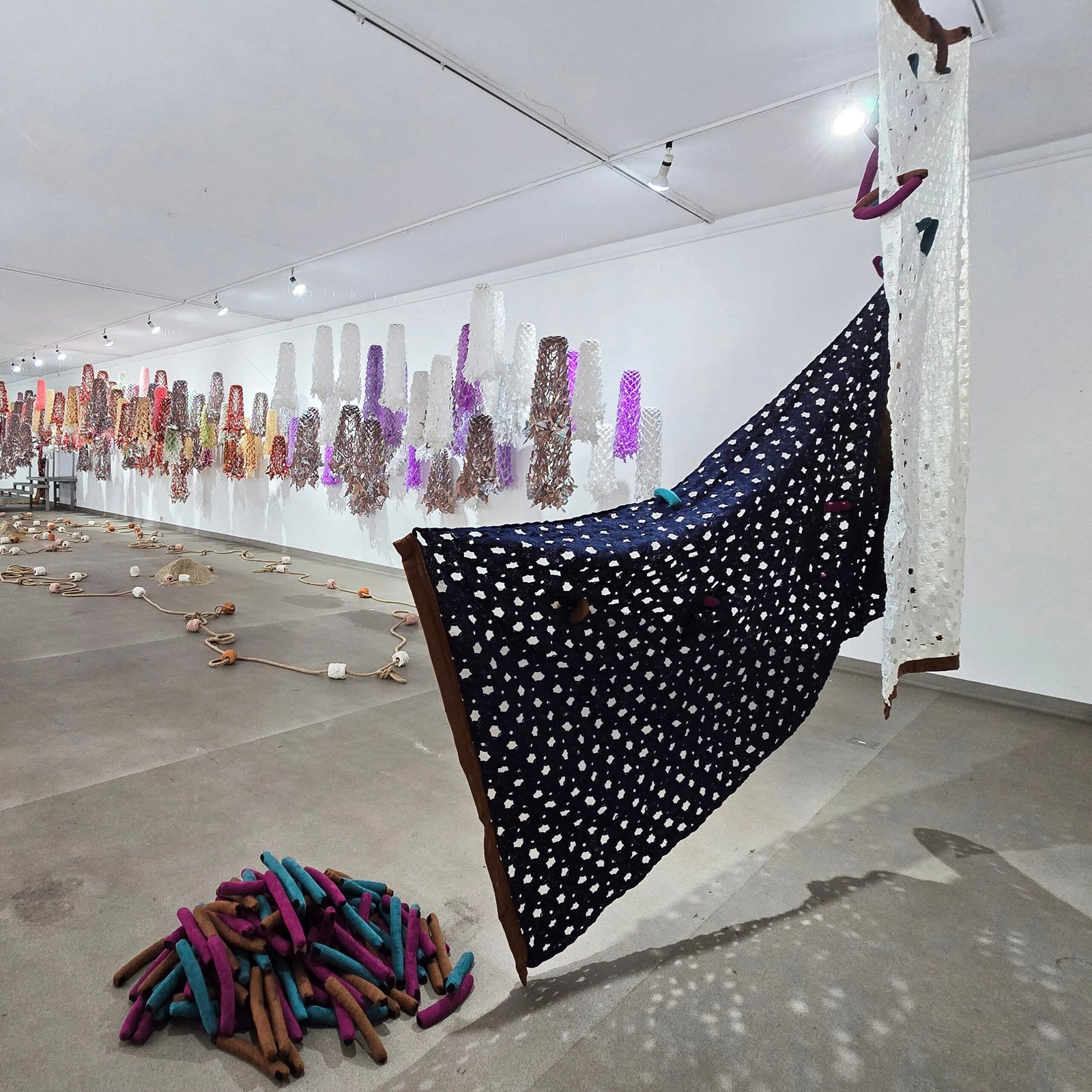
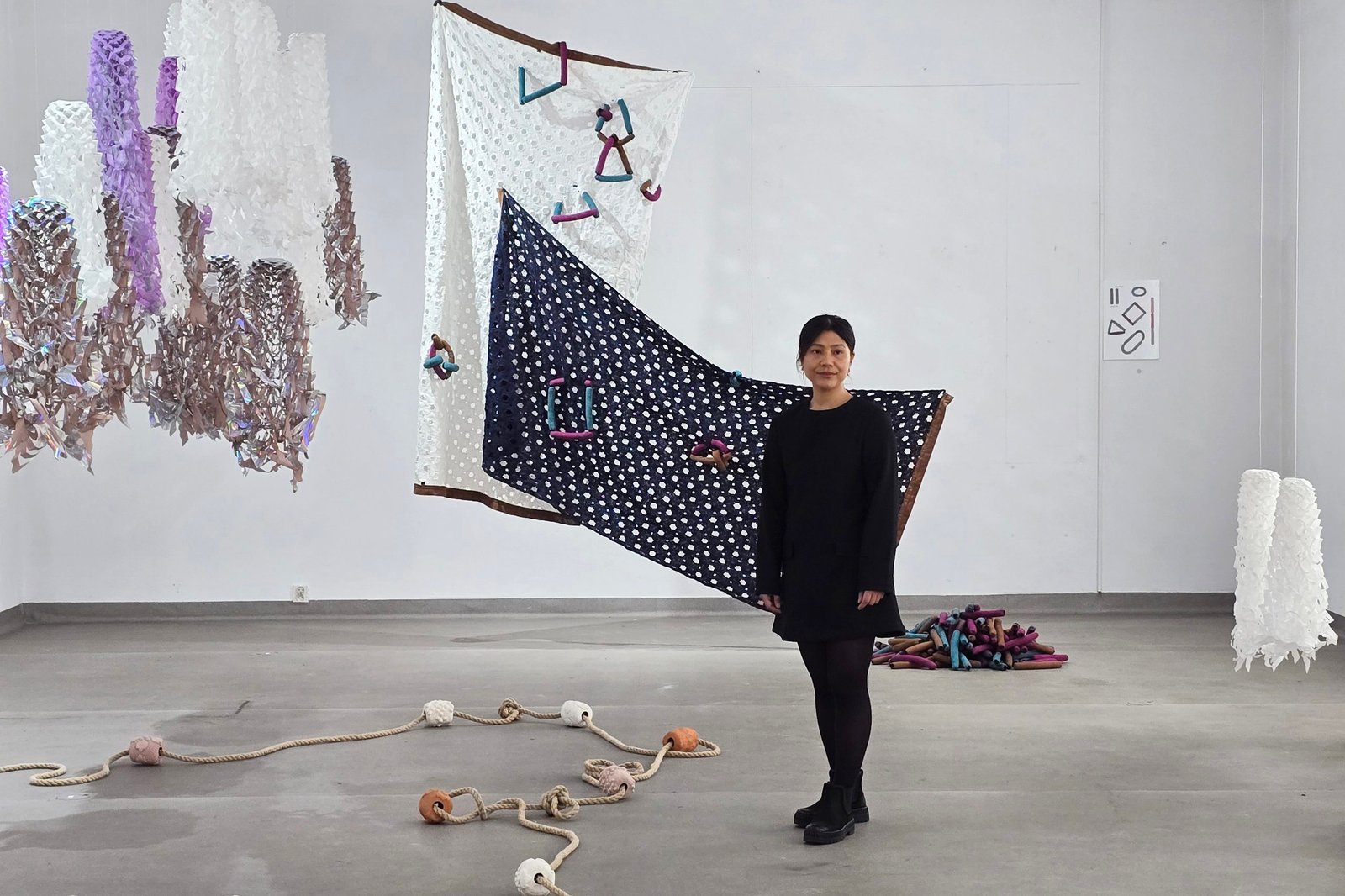
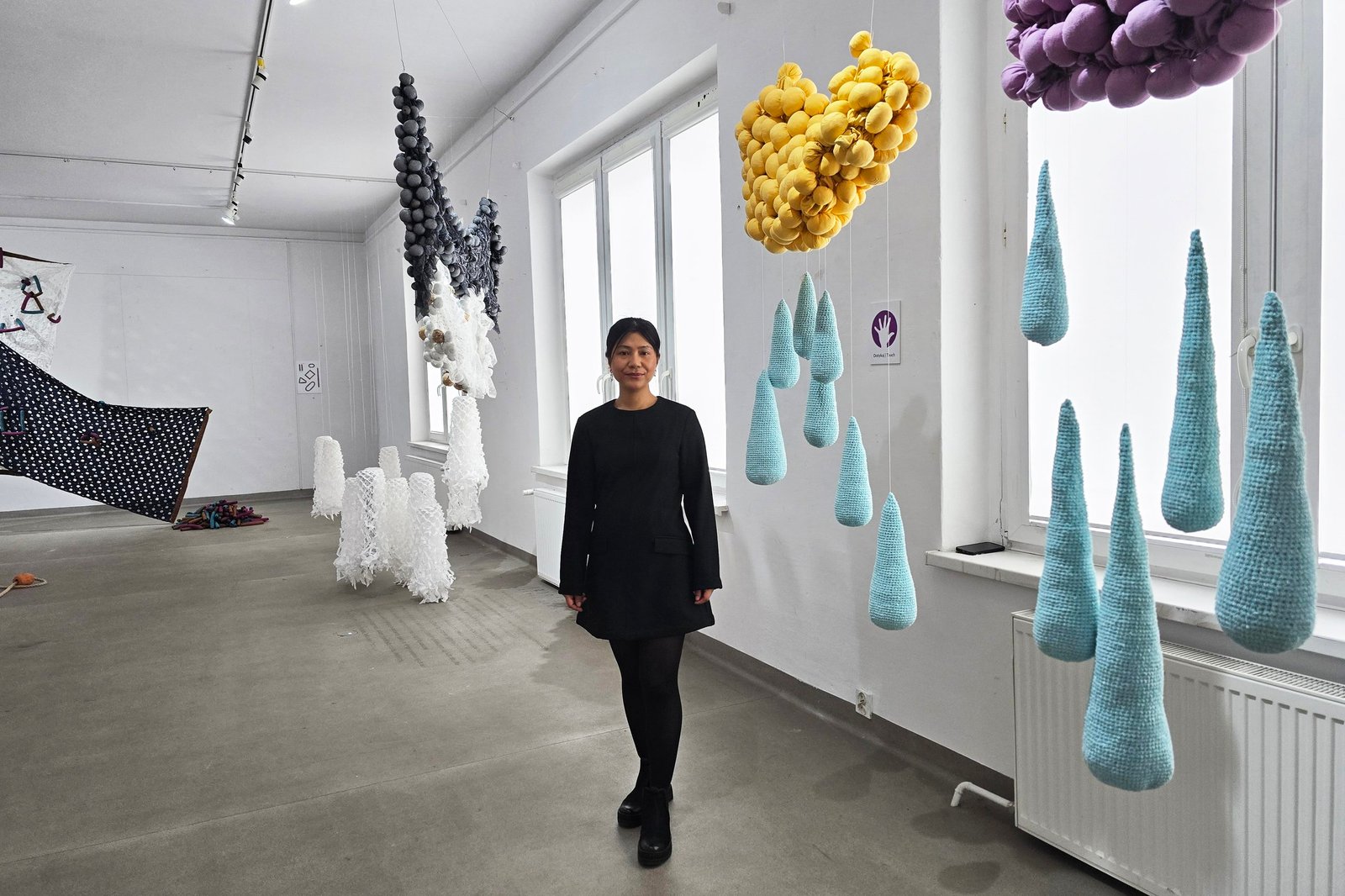
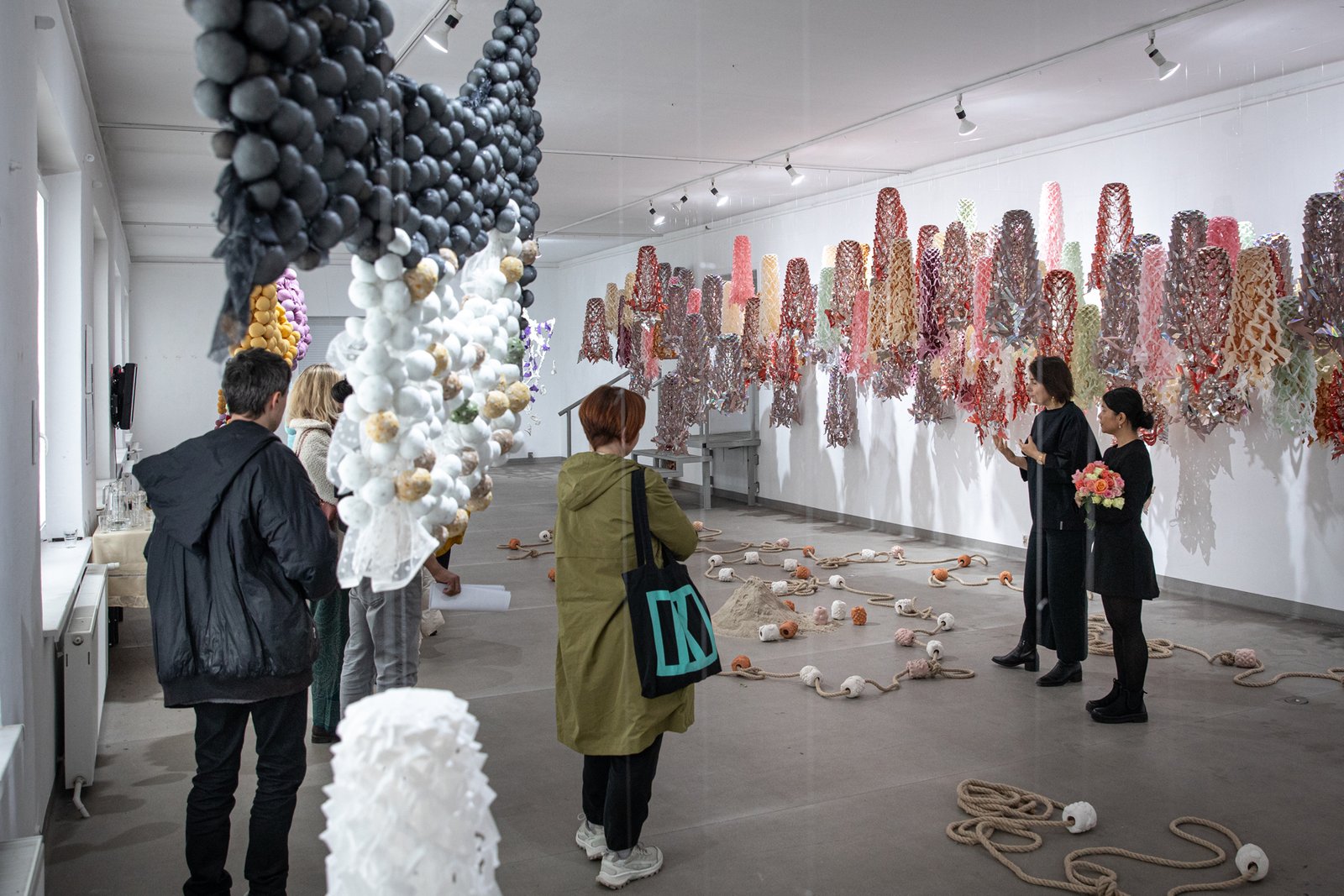
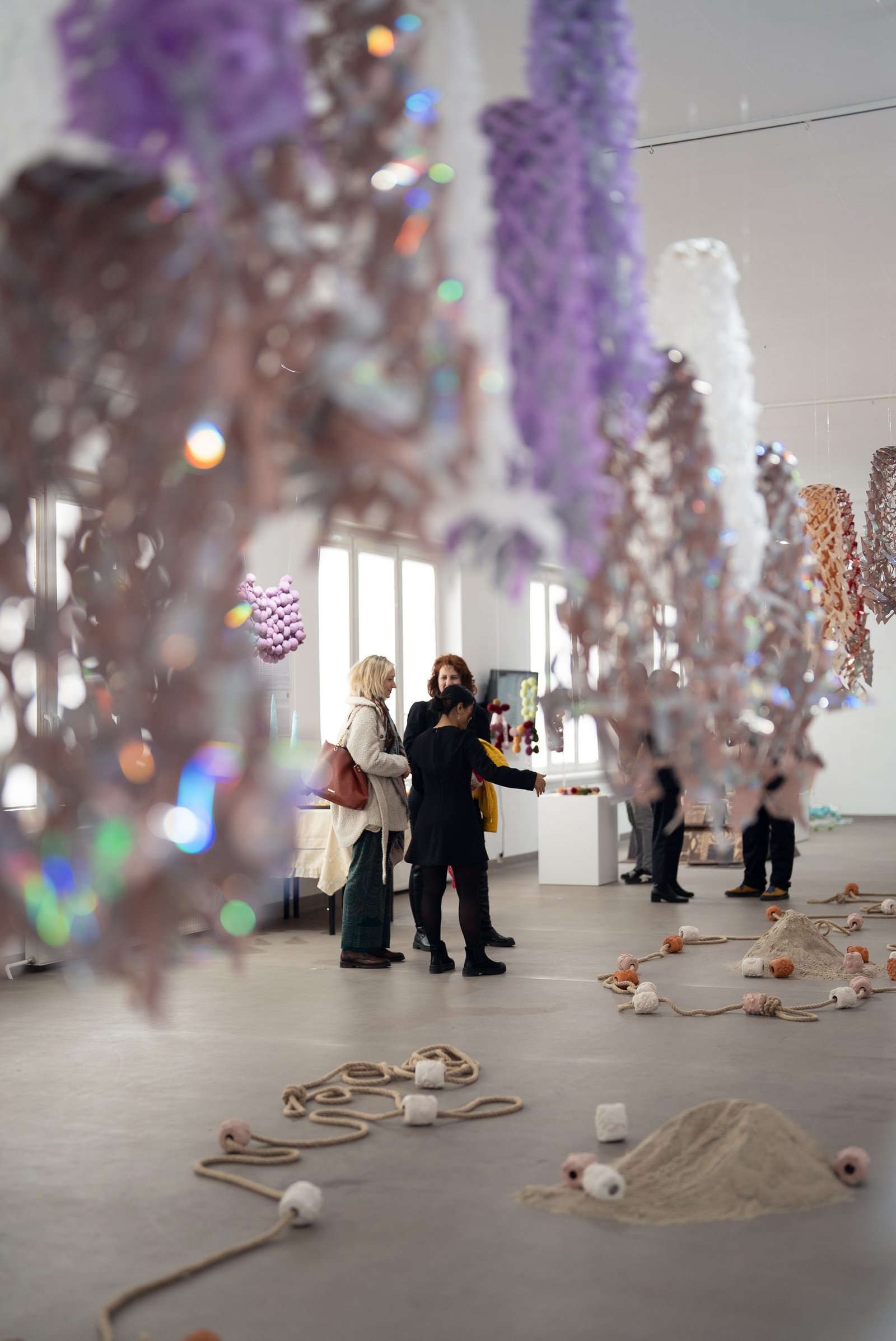
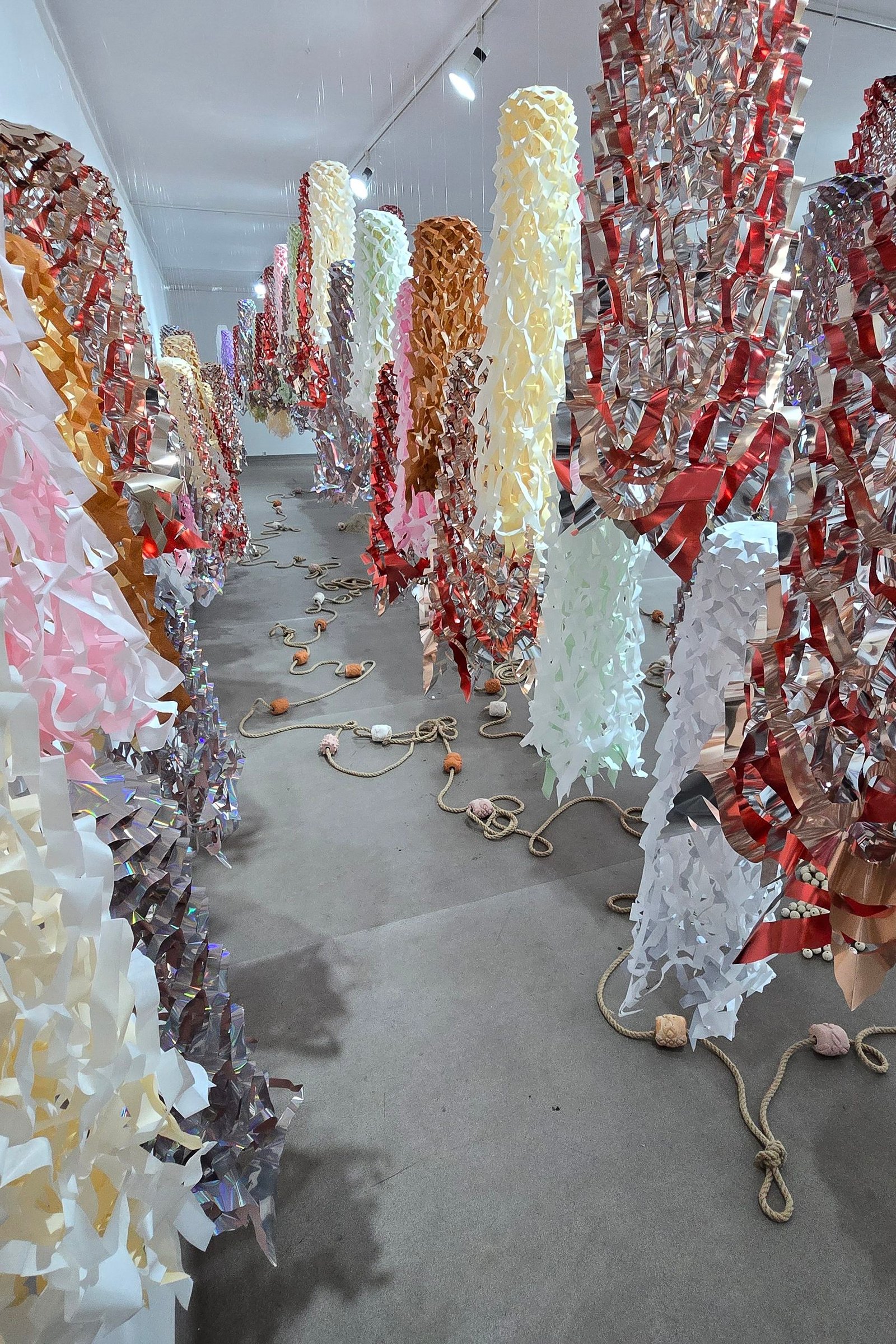
The final outcome of this research is an immersive installation art space. The creative process behind the BLOOM series culminates in the development of a healing environment where tactile sensory-rich experiences, personal narratives, and relational dynamics come together to guide, interpret, and co-explore between the space itself and the individual visitor during the exhibition visit. It was designed for the final doctoral exhibition. This space is composed of four interactive zones: textile works, spatial paper forms inspired by traditional Thai cutting techniques, woodcut printmaking, installations using woodcut matrices, and ceramic prayer wheels.
This research sits at the intersection of art therapy and artistic research, using a practice-based approach. Art therapy here is understood as a creative process that supports emotional awareness, reflection, and well-being, rather than clinical treatment. Practice-based research produces knowledge through making, with the artwork itself acting as a form of
inquiry. Sensory and embodied experience is central, as the body is a site of knowledge. Touch is approached as a key sense for connecting with oneself, others, and the environment. Through tactile interaction, this research explores how sensory engagement can foster emotional awareness and support healing.
This practice-led research is grounded in positive psychology and investigates tactile experience as a mode of emotional reflection and self-awareness. The methodology is based on participation, observation, and
documentation, positioning both the artist and the audience as active contributors to the research process. Through embodied engagement with textured materials, the project examines how touch can foster emotional resilience, bodily awareness, and perceptual attunement. Workshops and public interactions form a key part of the research, allowing the work to evolve through lived experience rather than fixed outcomes.
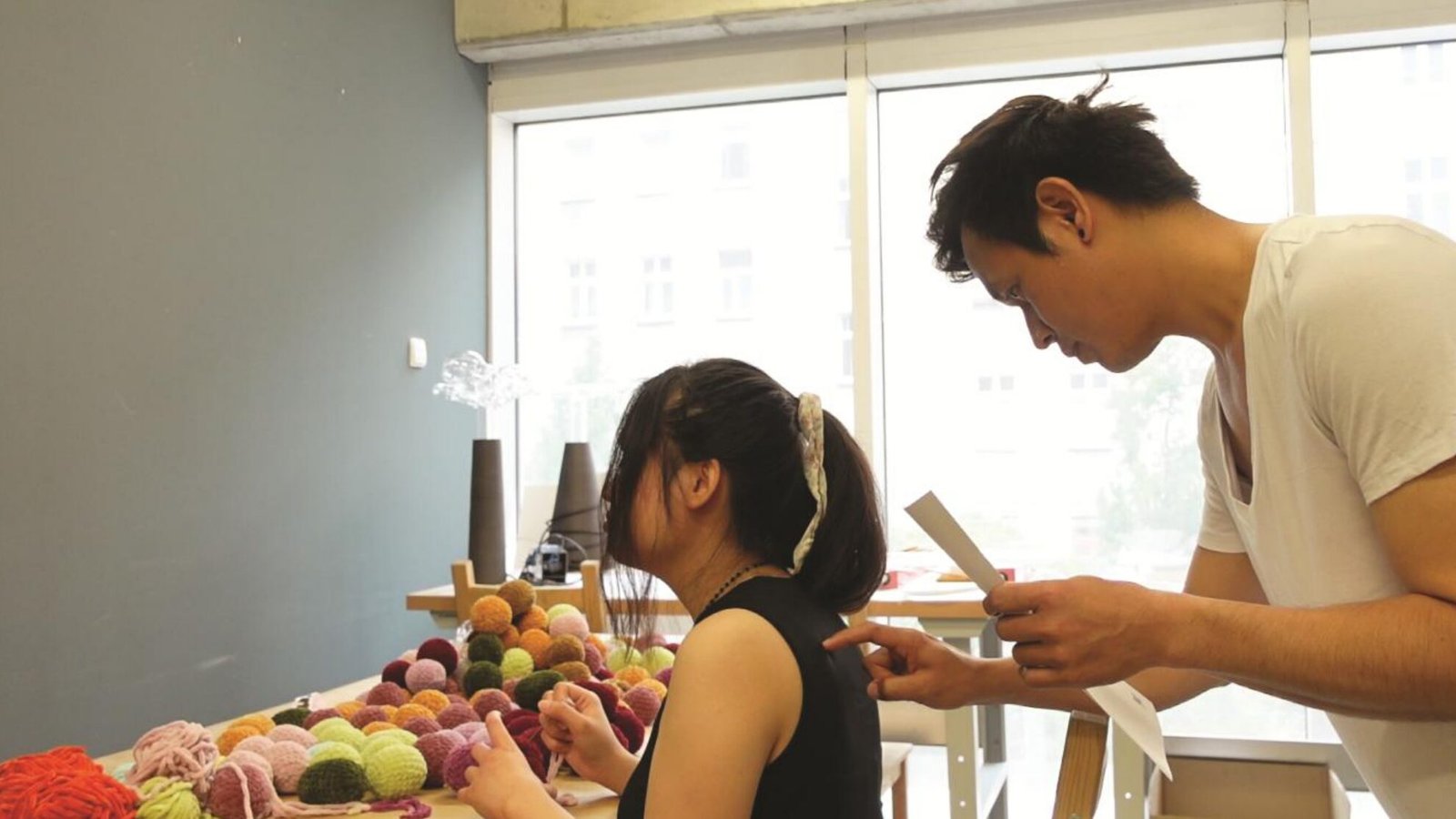
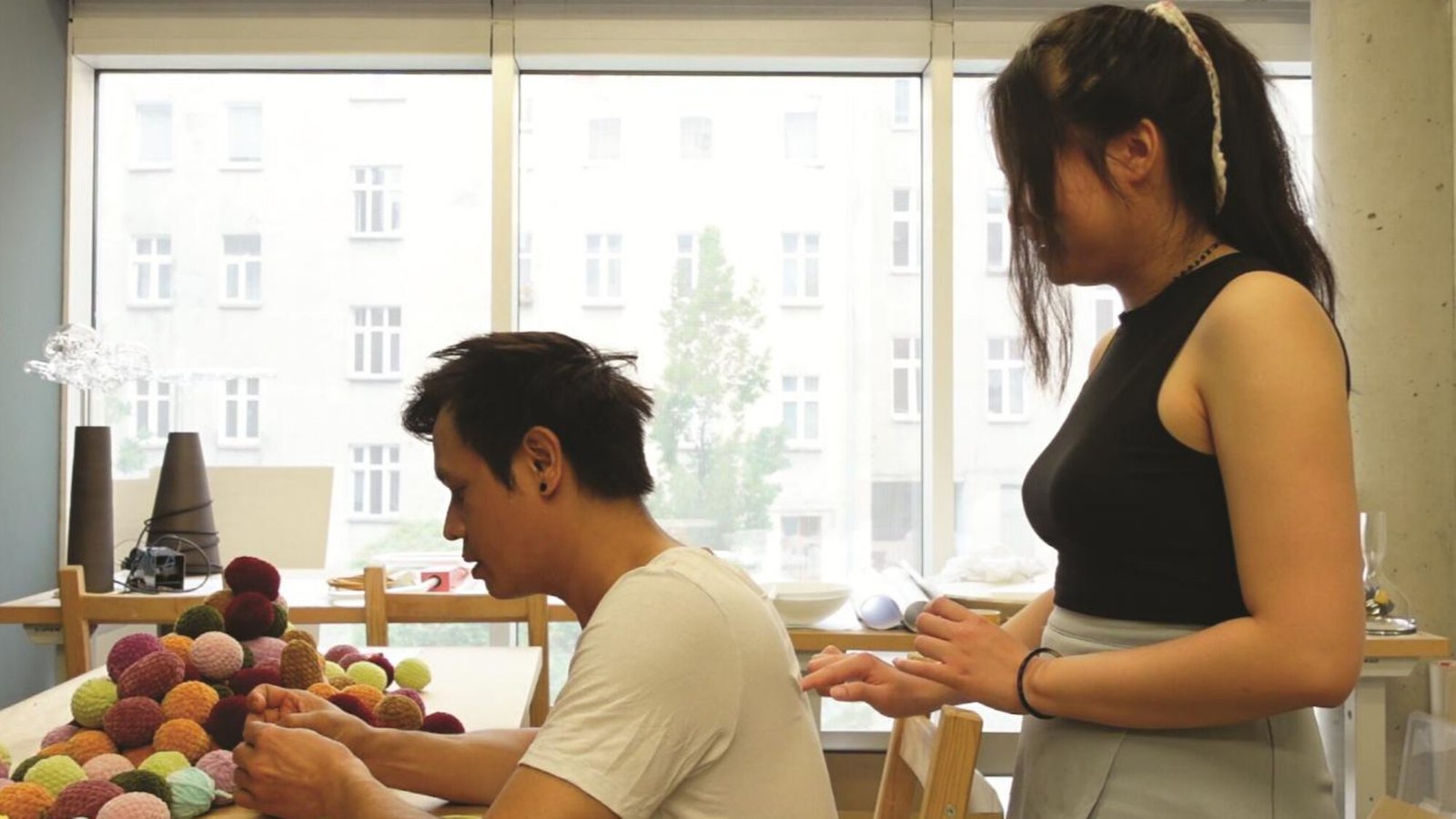
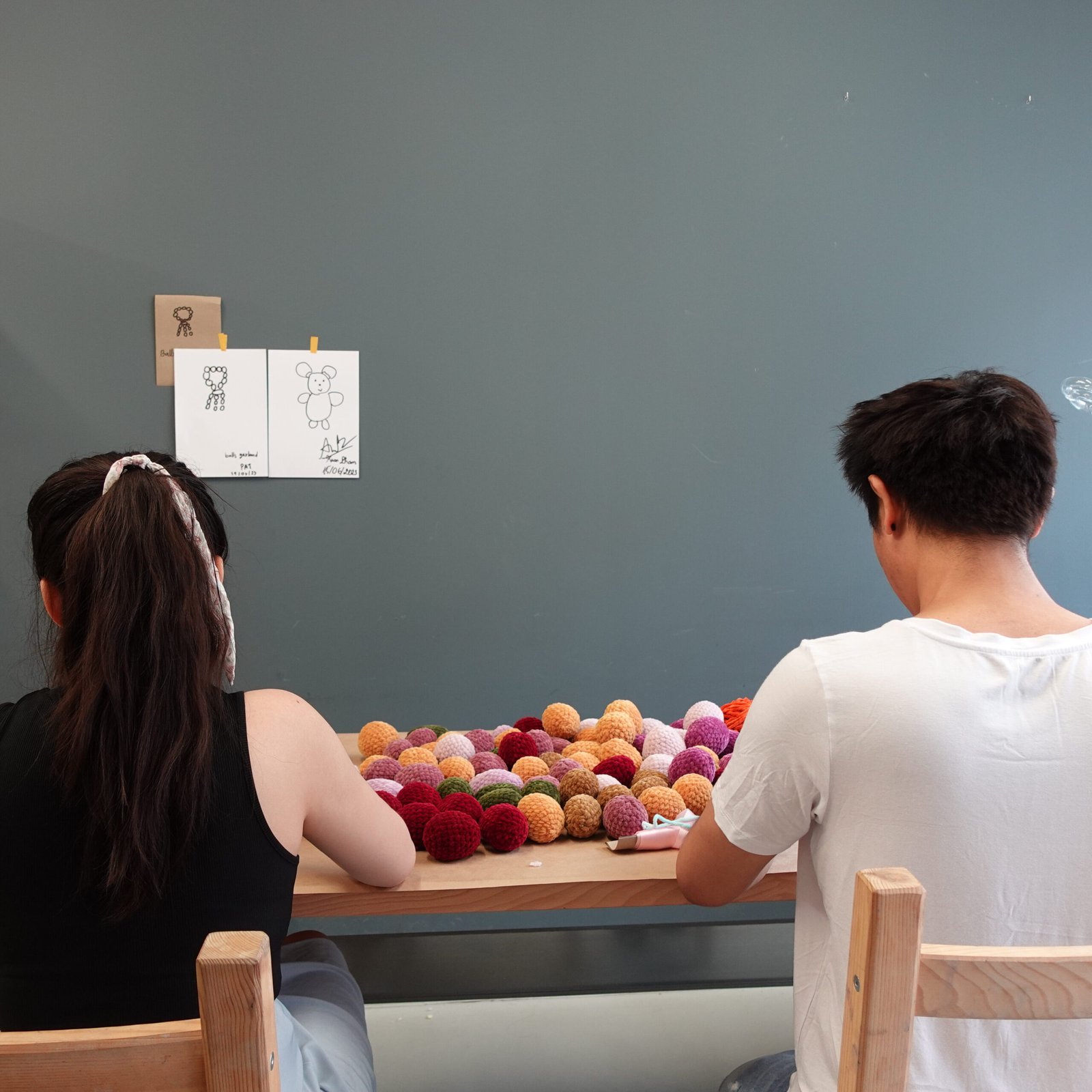
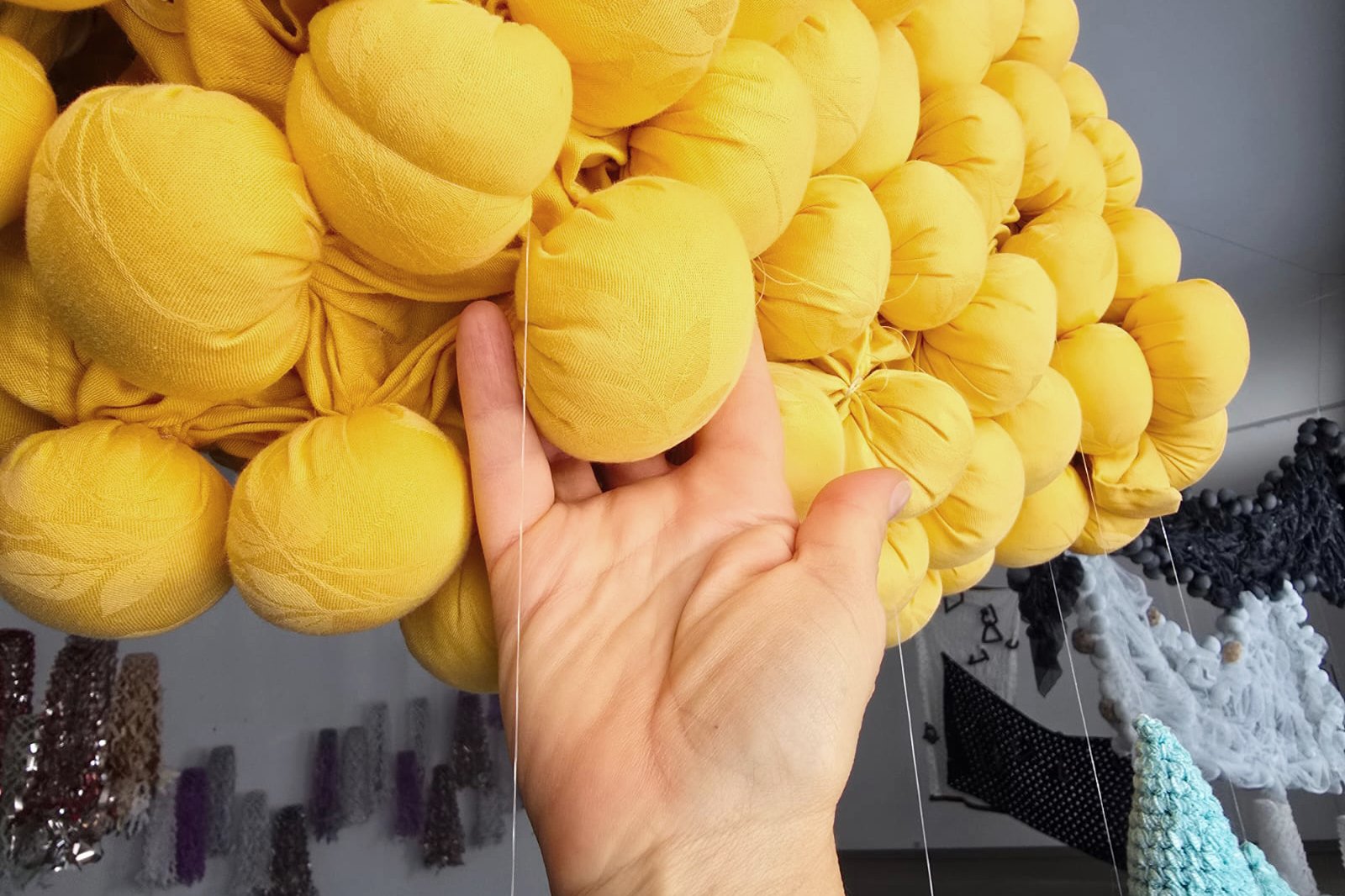
Haptic signals by touching or drawing on the back workshops – Crocheted balls 15.06.2023
There were two participants in each workshop. One participant was using a finger to draw on the back of another participant in order to create the artistic work. The drawings are referenced from sketches of each participant.
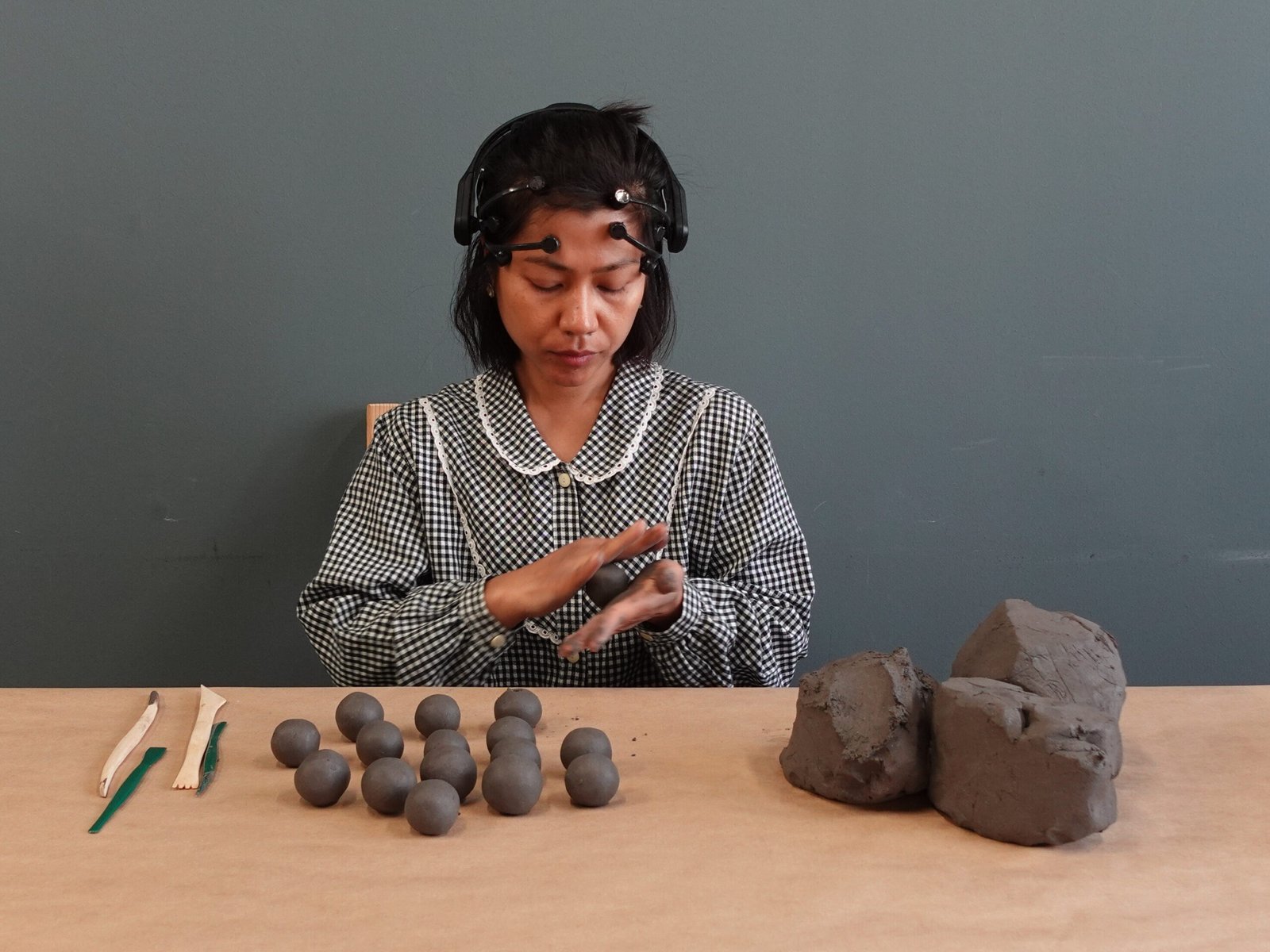

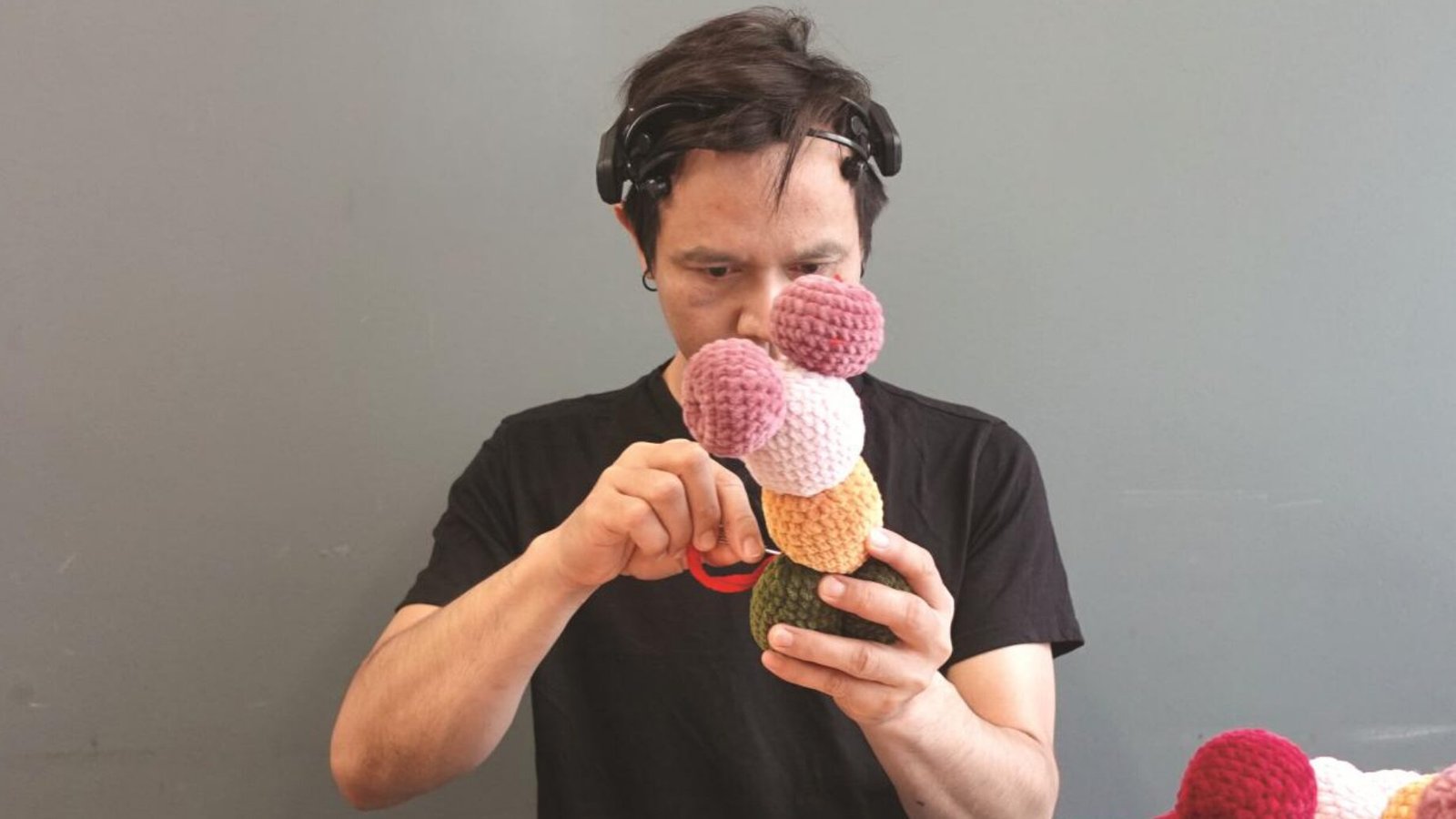
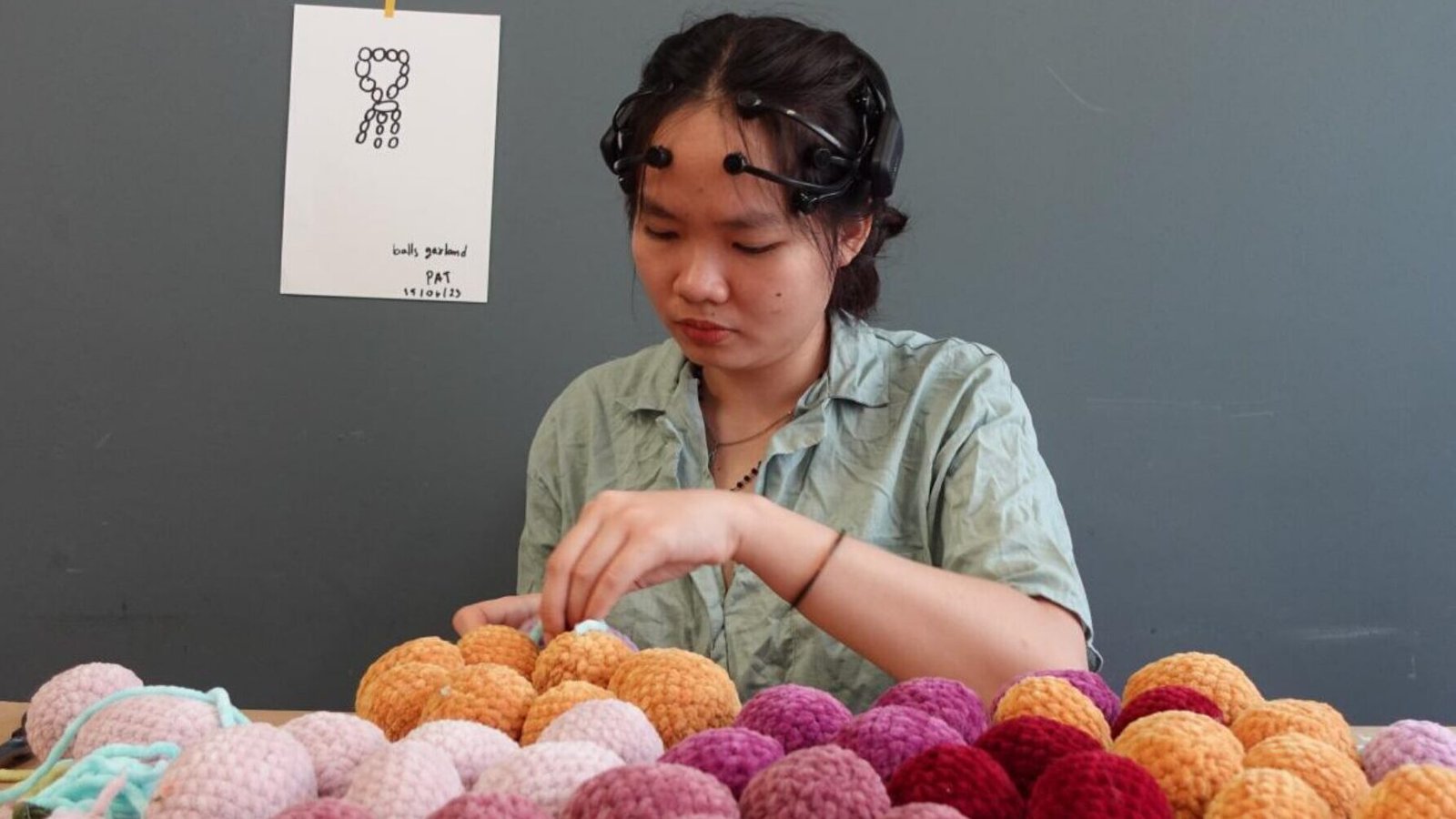
This research combines sensory-based art practice, haptic signals, and EEG technology to explore bodily and emotional responses during tactile interaction. Workshops and individual practice were used to test materials, textures, and spatial arrangements, while participants’ behaviours and emotional reactions were observed and documented. EEG self experiments during crochet and clay activities helped examine states of focus, calmness, and embodied attention.
Textile Works as Experiential Space
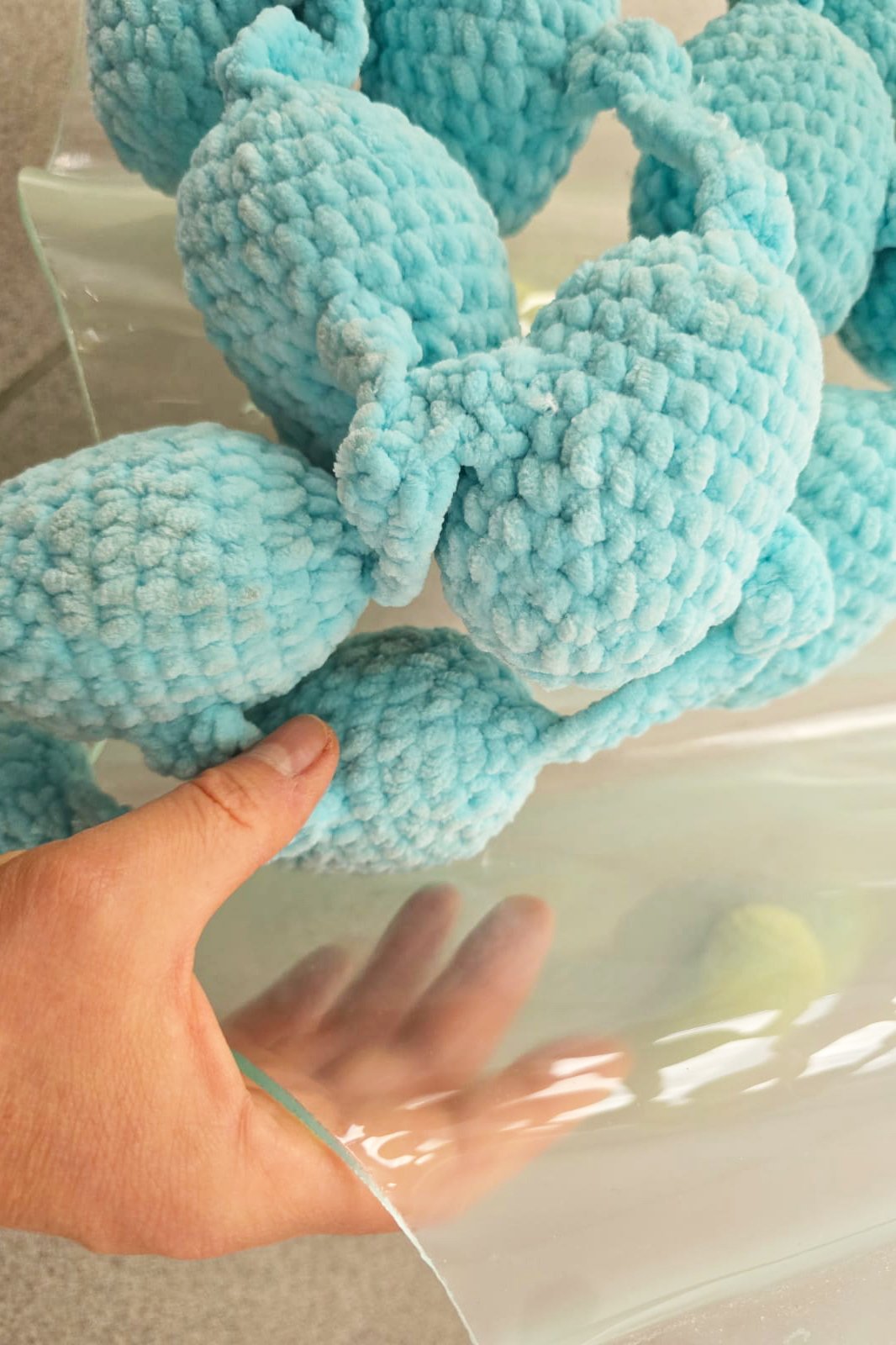
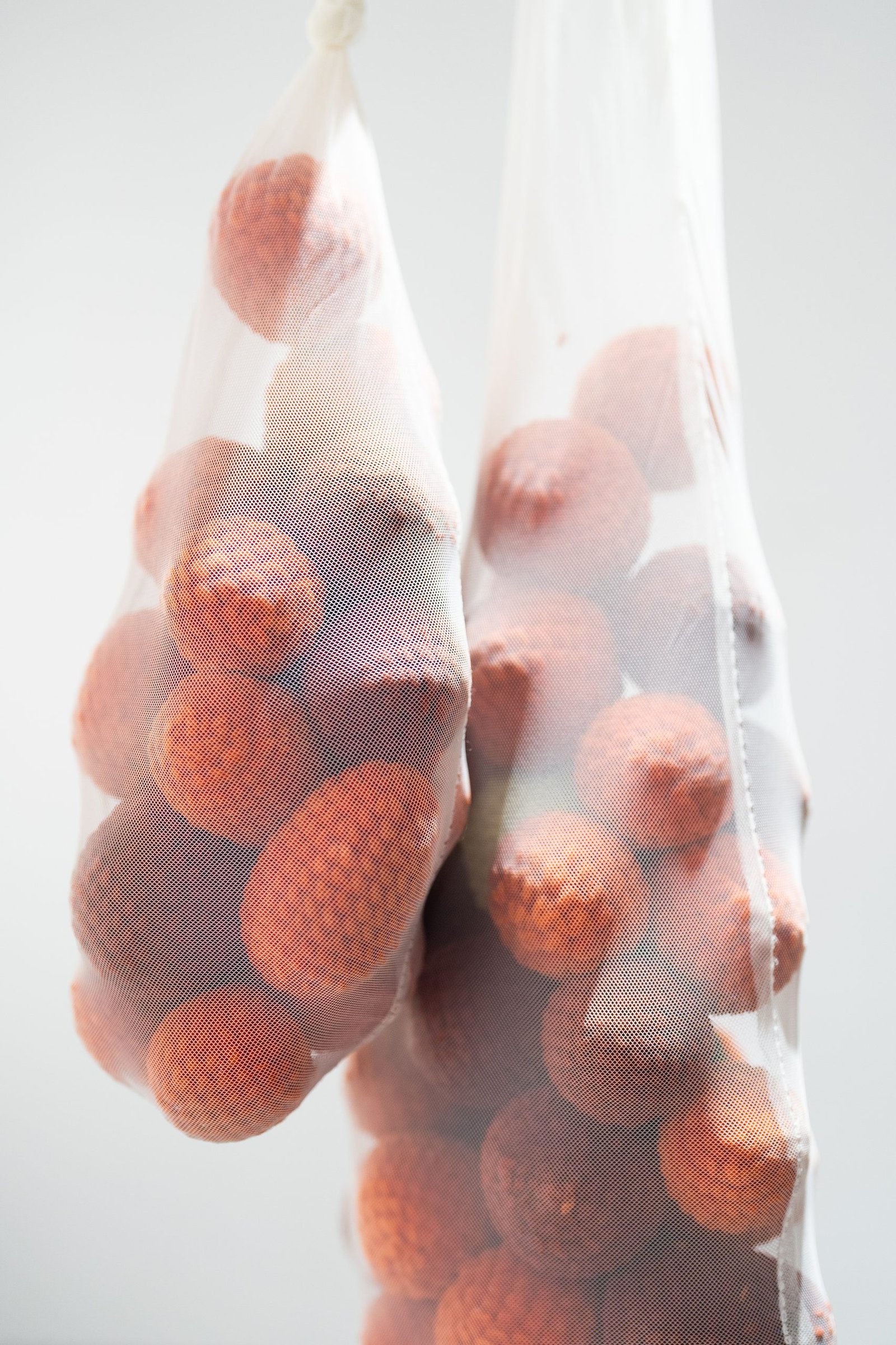
Inspired by Lilly Reich, my work explores textiles as spatial and experiential materials that are soft, adaptable, and responsive rather than purely decorative. Her approach to fabric installations has influenced the way I arrange and structure space, using textiles to shape movement, atmosphere, and sensory engagement. Like Reich’s installations, my textile forms suggest quiet movement and impermanence, encouraging the visitor to navigate, touch, and feel rather than merely observe.
Developed between 2023–2025, these works respond to their architectural surroundings and invite active bodily engagement. Through the Haptic Signals workshops, I explored soft, repetitive textures, weight, and organic forms to evoke calm, reflection, and emotional presence. By combining crochet with fabric, thread, and hand -sewing, the textiles create intimacy, protection, and shifting boundaries, shaped by light, gravity, air, and human presence





Spatial Forms from Cut Paper Based on
Traditional Thai Paper Cutting Techniques
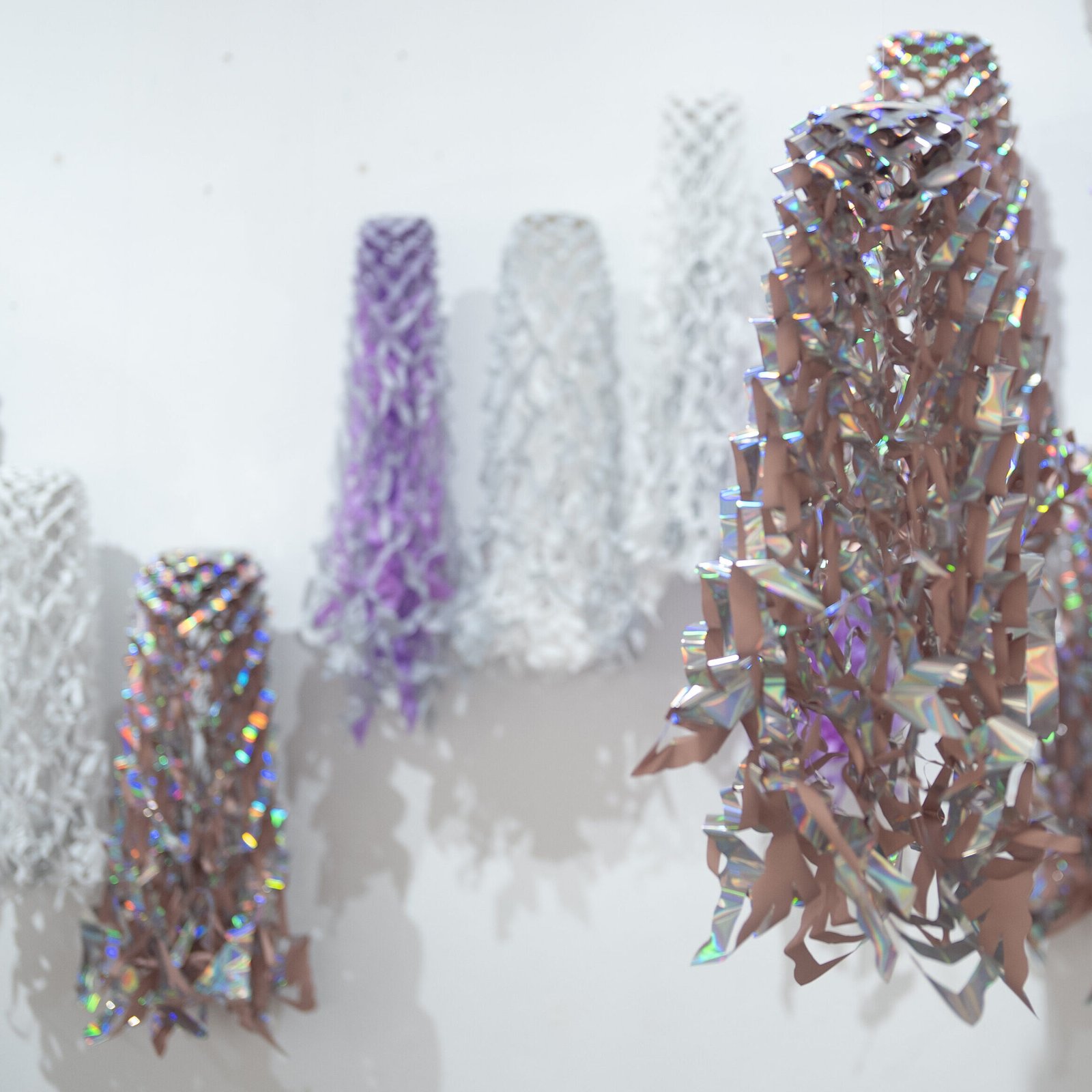
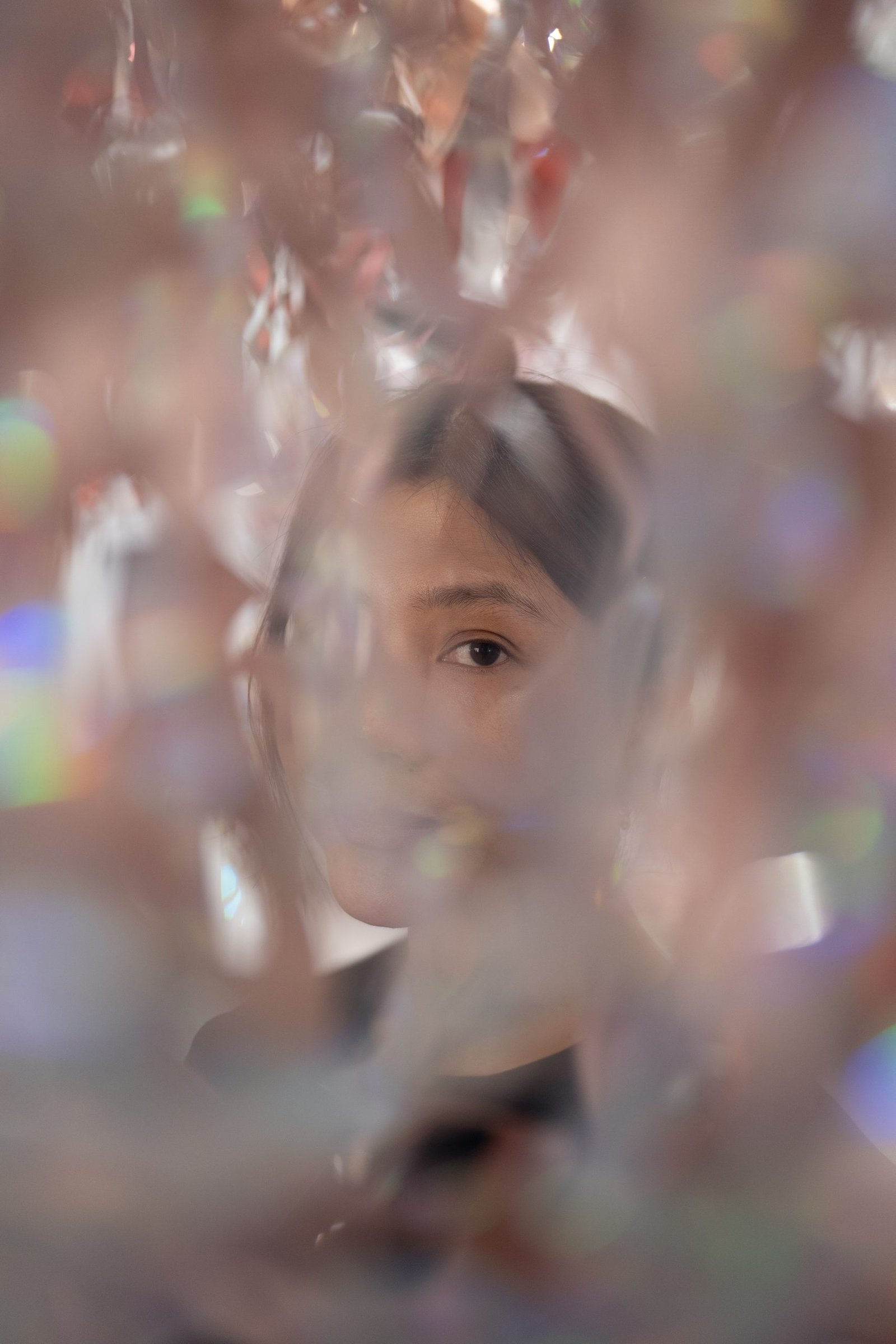
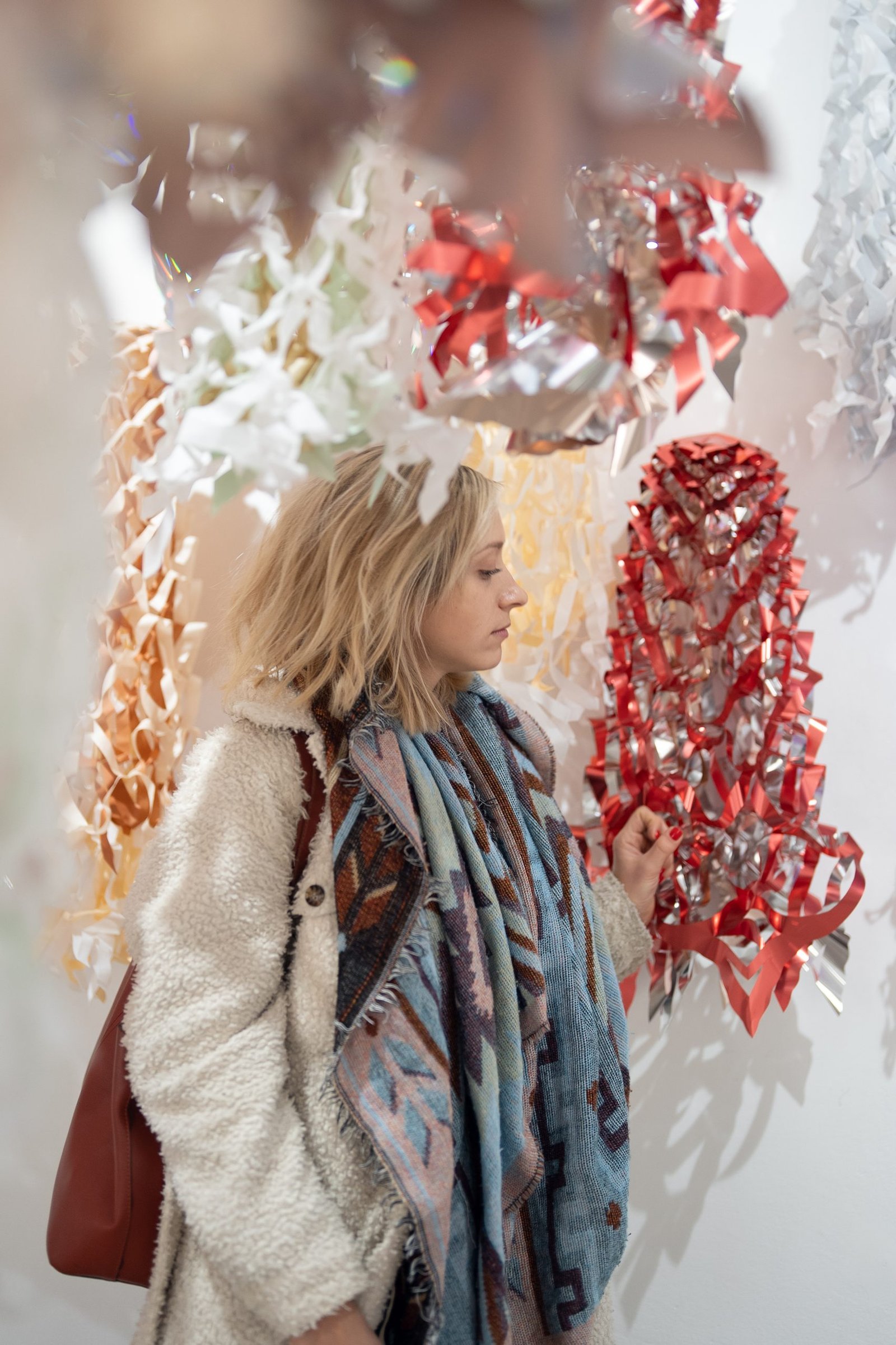
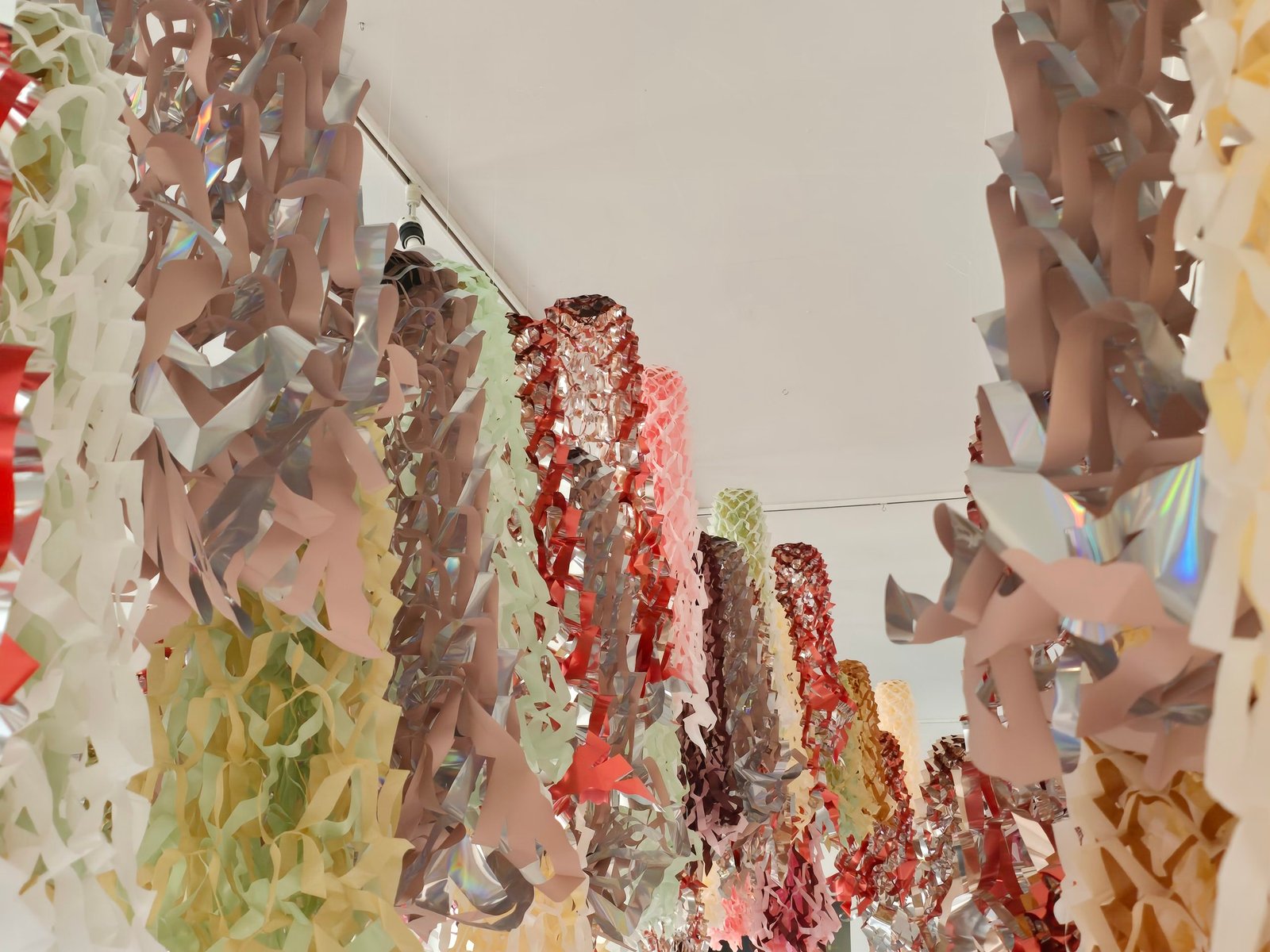
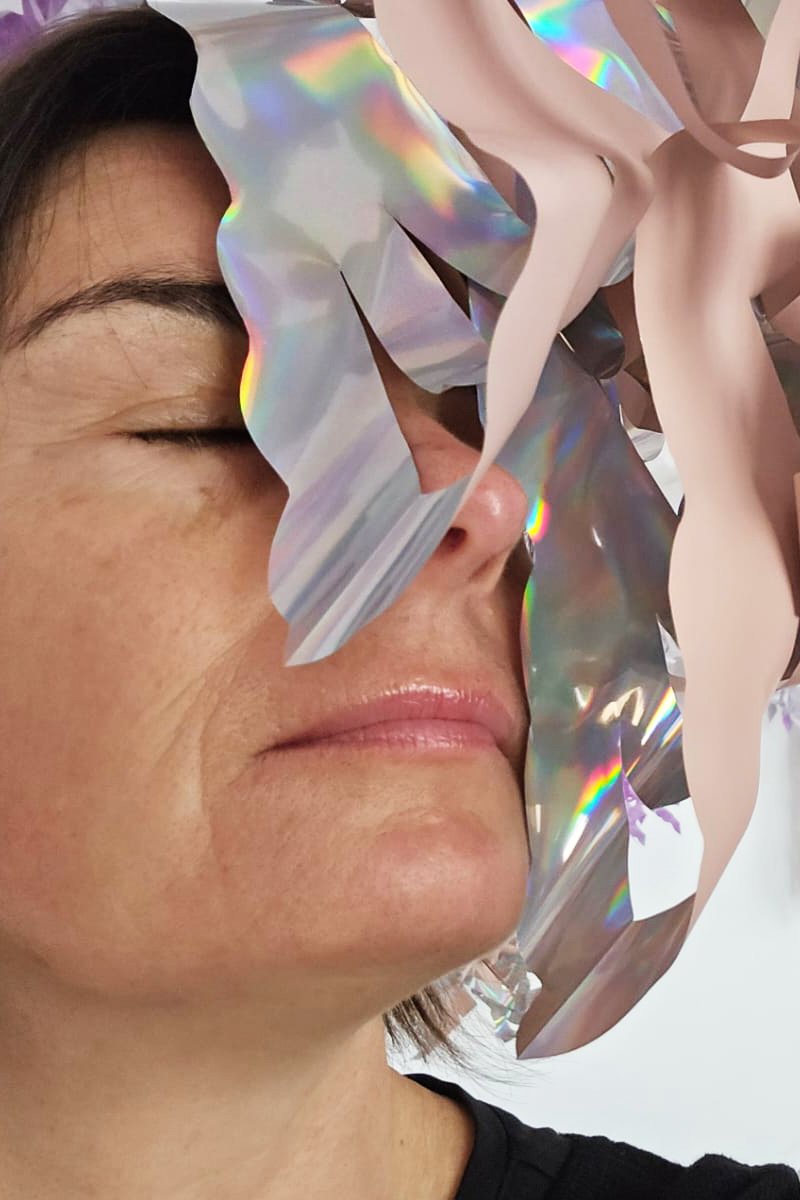
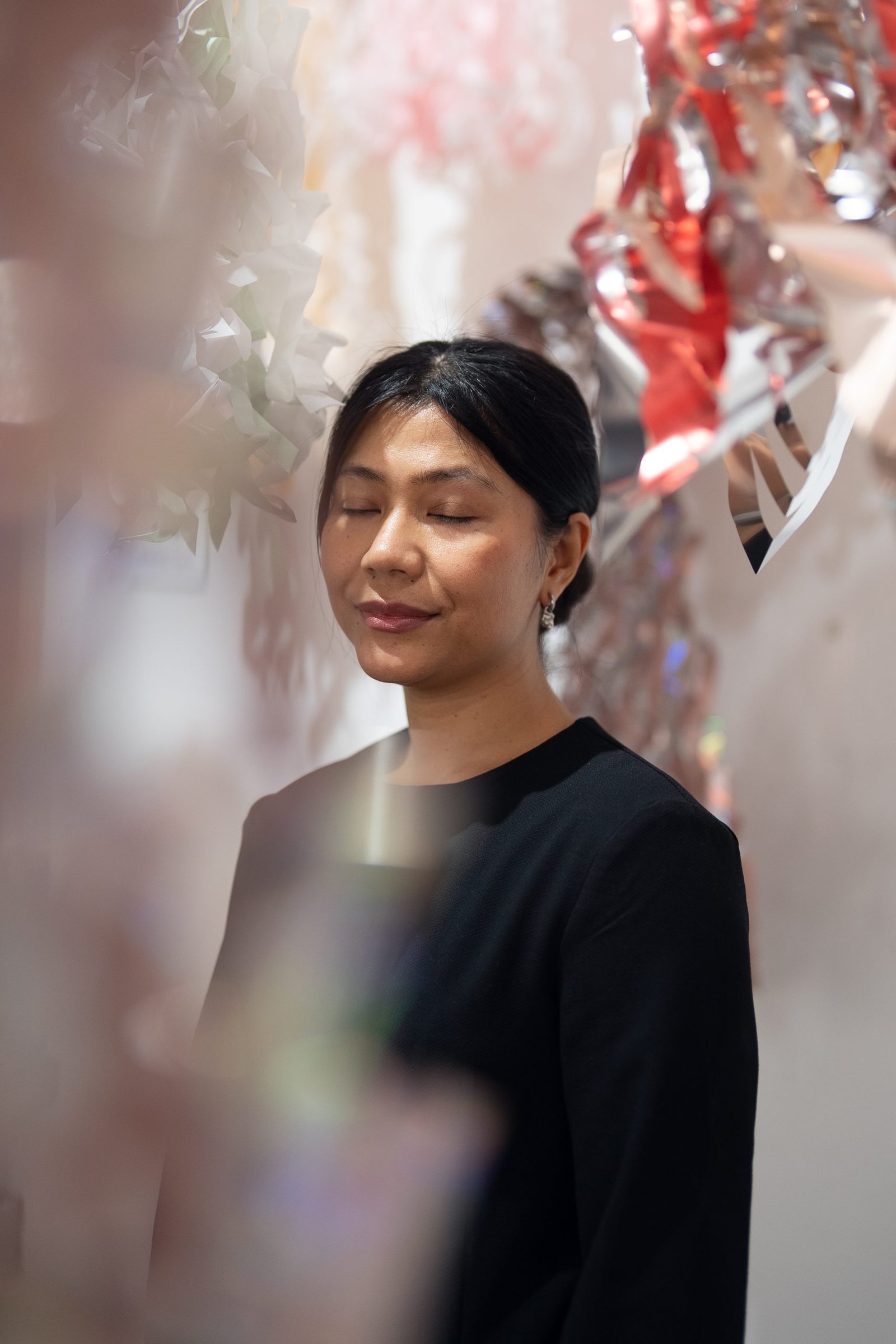
These research-based works transform flat materials such as paper and reflective foil into three-dimensional, translucent forms through cutting and folding. The contrast between the foil’s shimmer and the paper’s softness creates a dialogue between reflection and delicacy. Integrated into larger, multi-coloured installations, the works offer a sensory, interactive experience, inviting viewers to engage through touch and vision, and to reflect on personal perception, emotion, memory, and the fleeting essence of joy.


Embossed Woodcut Printmaking
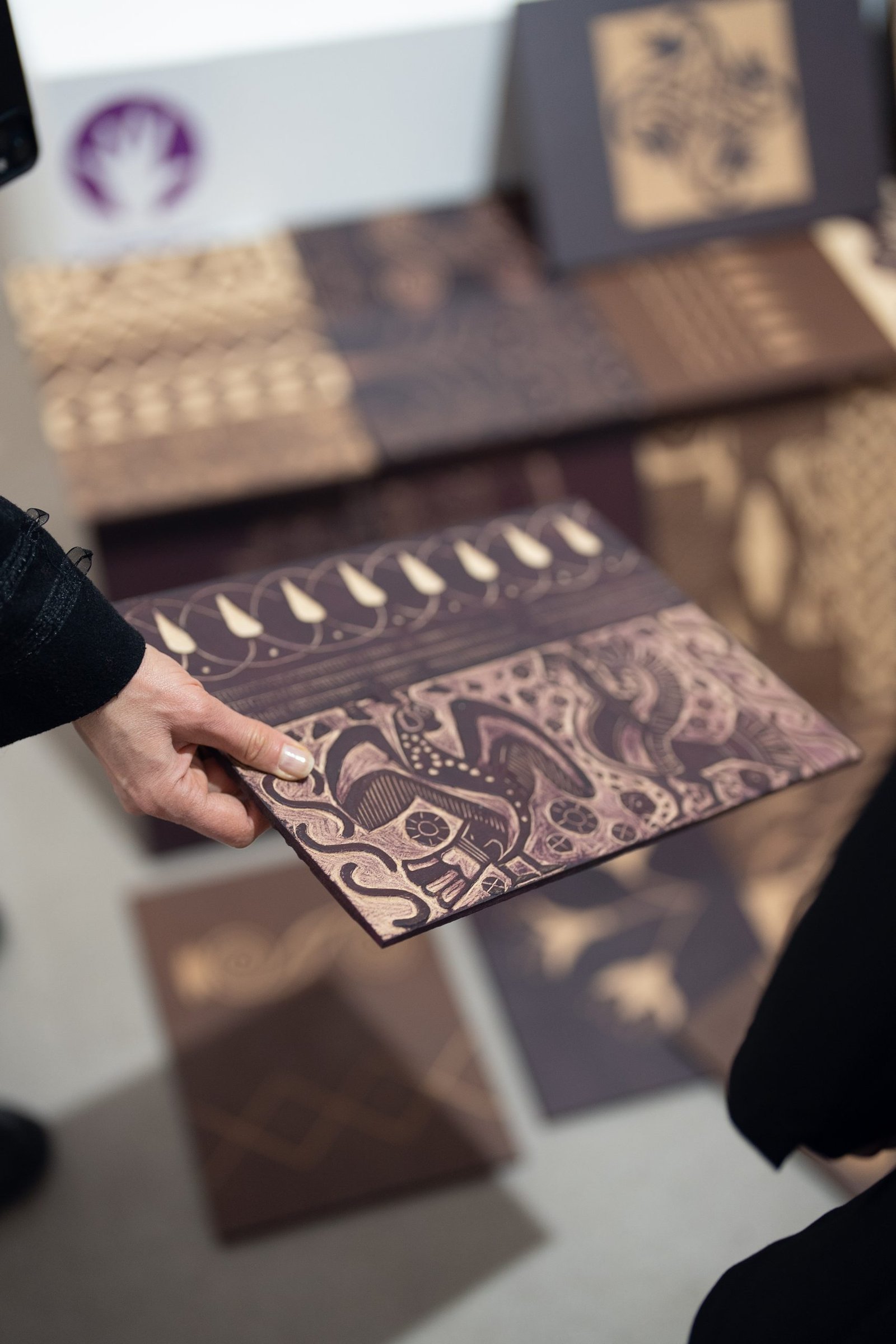
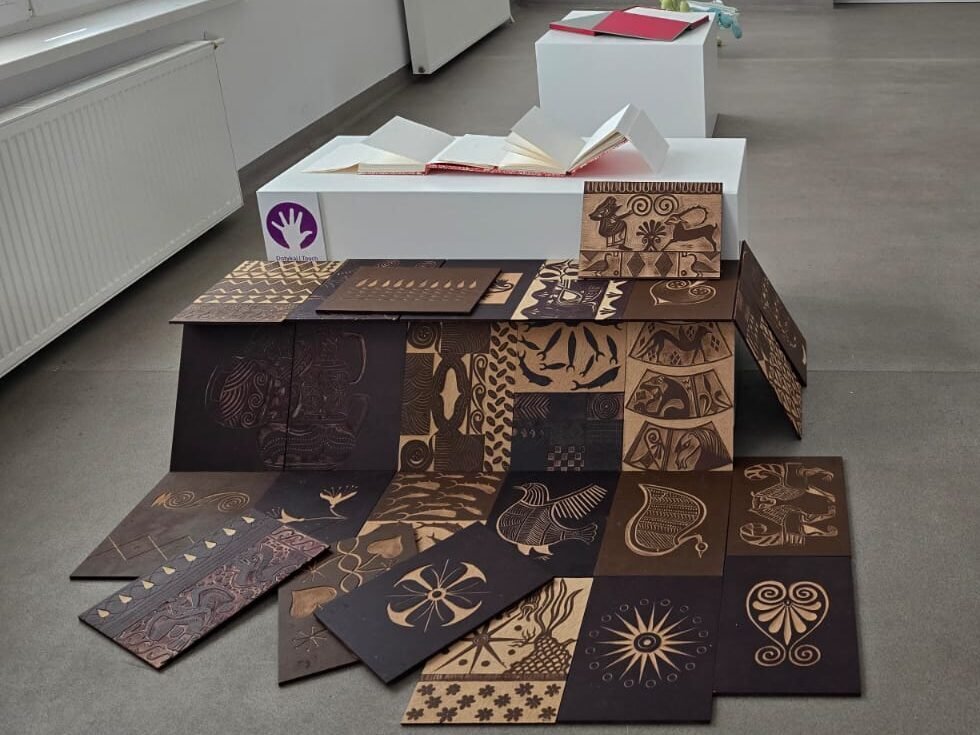
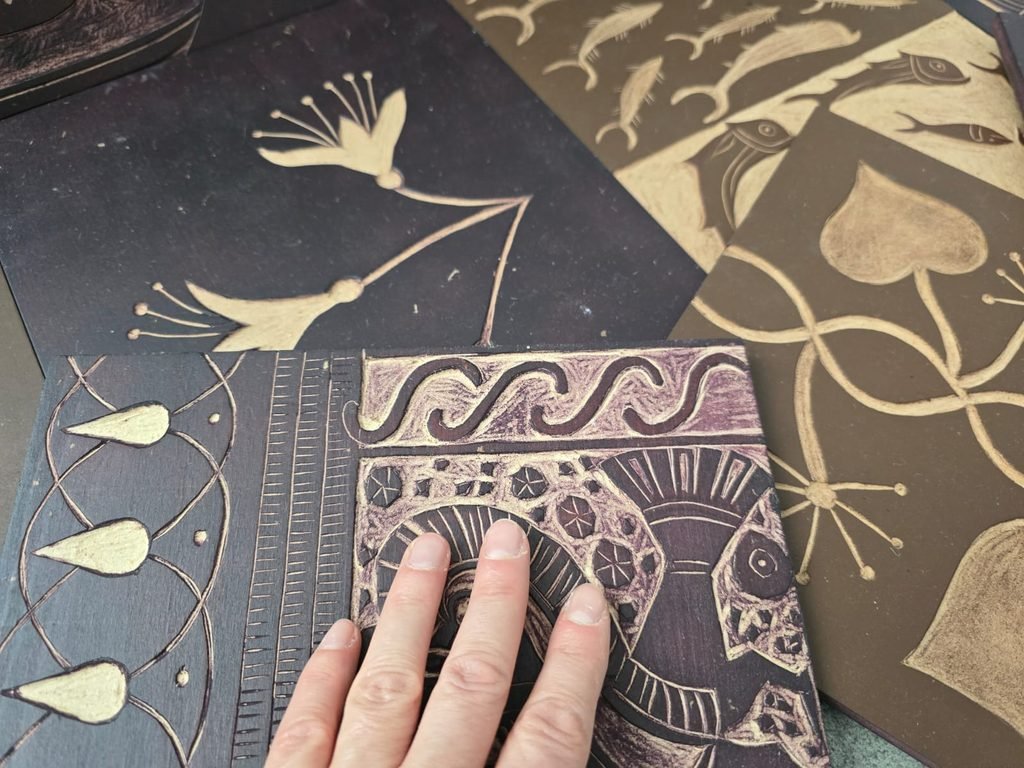
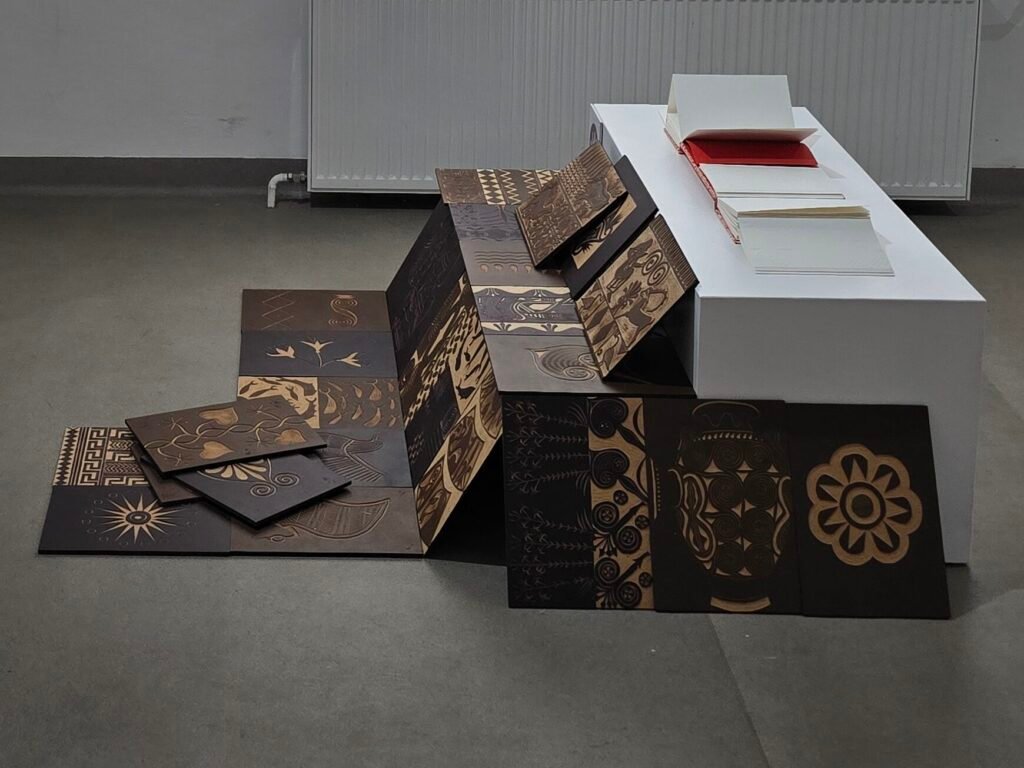
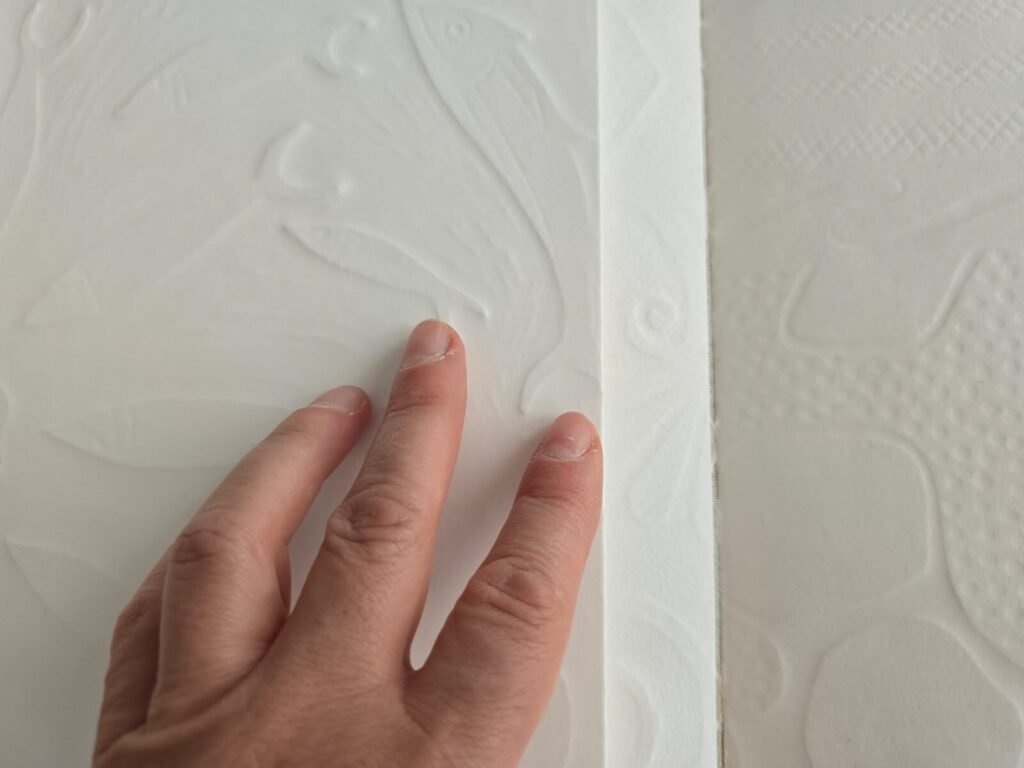
This work was inspired by a book I read during my first week in Athens, Architectures of Healing: Cure through Sleep, Touch, and Travel. The book explores the practice of incubation in Ancient Greece, where healing rituals associated with Asklepios took place. In temples and monasteries, people
gathered to sleep in sacred spaces, seeking healing through divinely inspired dreams and bodily restoration.


Yam: Ceramic Prayer Wheels
Traditionally, the Pra Jam Yam pattern decorated sacred architecture and was believed to protect valuable spaces from harm. The word Yam in Thai means to guard, reinforcing its role as a visual and spiritual guardian. In my project, Pra Jam Yam functions as a conceptual anchor rather than decoration. Through repetitive ceramic forms and tactile presence, the work evokes protection, continuity, and calm. Reimagined in a contemporary context, the pattern becomes a bridge between heritage and the present, inviting slow engagement, reflection, and sensory awareness.